Older Homes and Apartments
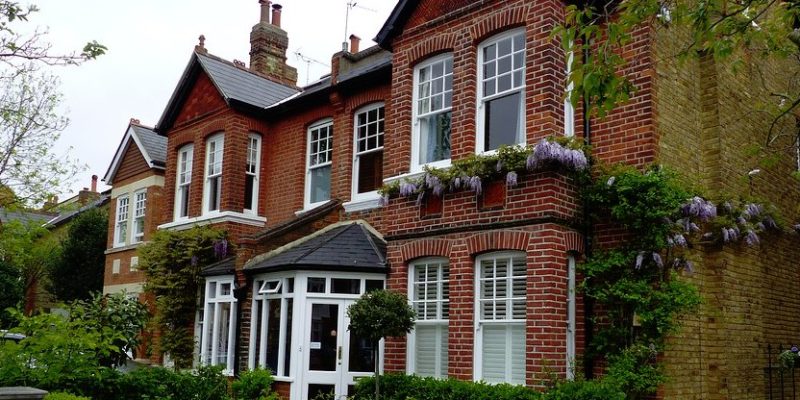
Properties built before 1978 may contain lead-based paint on walls, ceilings, windows, doors, trim, radiators, stairs, railings and other components.
Certified Lead Inspection, Dust Sampling and Risk Assessment
Independent XRF lead paint inspections, lead dust wipe sampling, post-work clearance testing, lead risk assessments, renovation investigations, water and soil sampling, and written documentation for residential and institutional properties.
Independent lead-hazard assessment
Angstrom Testing Services LLC provides XRF lead paint testing, lead dust wipe sampling, lead dust clearance testing, lead risk assessments, paint chip sampling, soil sampling, water sampling and written consulting for homes, apartments, co-ops, condominiums, schools, daycares, health care facilities, property managers, attorneys, contractors and building owners.
Lead concerns may involve deteriorated paint, friction and impact surfaces, renovation dust, window replacement, sanding, scraping, demolition, contractor work, contaminated soil, drinking water, child exposure investigations, HPD violations, Local Law documentation, real estate due diligence or post-cleaning clearance.
XRF paint testing, dust wipe sampling and risk assessment answer different questions. XRF identifies lead in painted components. Dust wipes measure lead loading on selected surfaces. A risk assessment evaluates current lead-based paint hazards and other potential exposure sources. The scope should match the legal, health, renovation, property-management or documentation objective.
Angstrom provides independent testing, inspection, sampling, consulting and reporting. We do not perform lead abatement, paint stabilization, renovation, repair, demolition, cleaning, remediation or reconstruction contracting.
Common reasons to request an inspection
Properties built before 1978 may contain lead-based paint on walls, ceilings, windows, doors, trim, radiators, stairs, railings and other components.
Chipping, flaking, cracking, chalking, water-damaged or impact-damaged paint can create accessible chips and lead-containing dust.
Window work, sanding, scraping, drilling, cabinet removal, wall demolition, floor work and other disturbance may release lead dust.
Lead-containing dust may move into adjacent rooms, hallways, closets, stairwells, furnishings, carpets and HVAC components.
Environmental assessment may evaluate paint, dust, soil, water and other possible sources while medical testing is handled by health care professionals.
Visual review and dust wipe sampling may be required or requested after abatement, paint stabilization, renovation or corrective cleaning.
Owners may need XRF records, exemption support, violation response, turnover documentation, common-area testing or other property records.
Testing may support licensing, facility management, due diligence, purchase decisions, legal review or pre-renovation planning.
Paint, dust, soil, water and clearance services
The correct scope depends on the property, jurisdiction, building age, painted components, renovation history, child-occupied areas, violation or exemption status, laboratory sensitivity and intended use of the results.
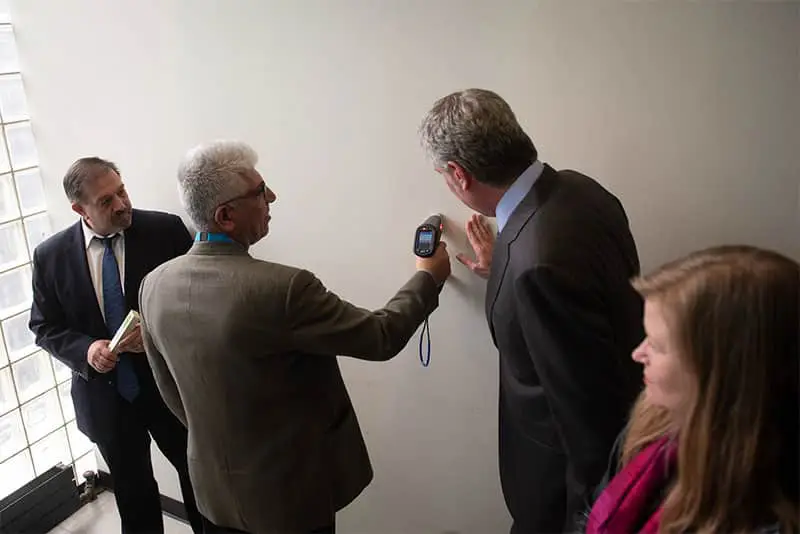
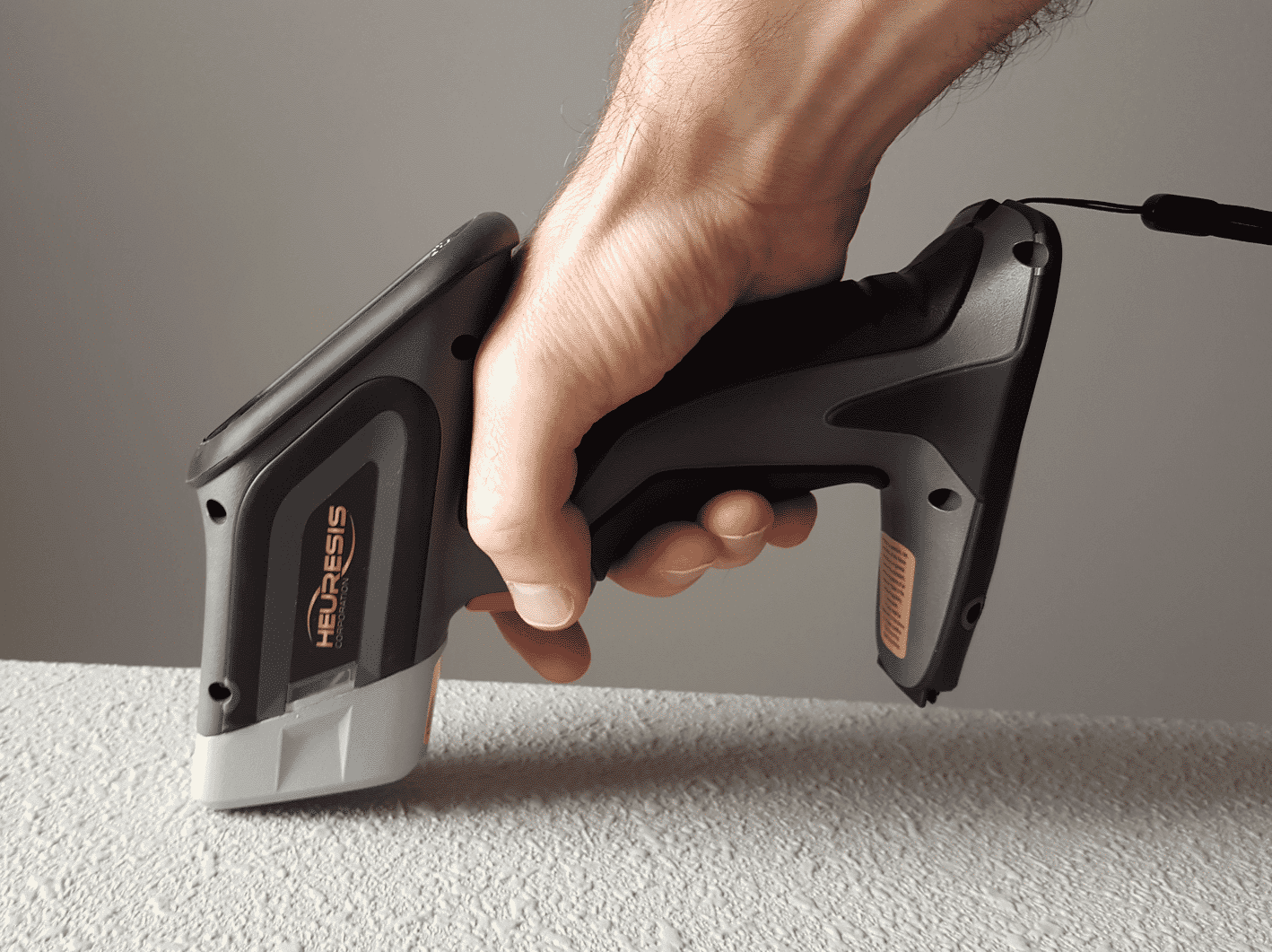
A handheld X-ray fluorescence analyzer is used to measure lead in accessible painted components without routinely removing paint from each tested surface.
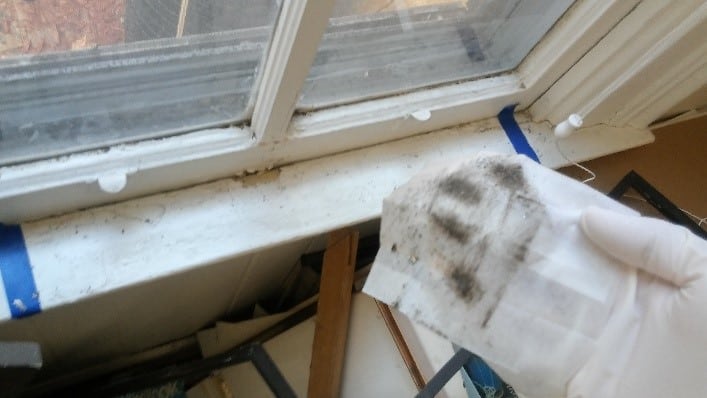
Dust is collected from a measured surface area on floors, window sills, window wells or other selected surfaces and analyzed by a qualified laboratory.
Post-work evaluation may include visual inspection, measured-area dust wipes, laboratory analysis and written documentation of selected clearance surfaces.
Risk assessments evaluate lead-based paint hazards and may include visual observations, XRF testing, dust wipes, soil, water and review of building conditions.
Paint samples may be collected when laboratory analysis is needed or when an XRF reading is unavailable, inconclusive or unsuitable for the component.
Services may support one-time XRF testing, exemption applications, violation response, property records and other building-specific requirements.
Testing may help determine whether regulated lead-based paint is present on components that will be disturbed during covered renovation work.
Sampling may evaluate the work area, adjacent rooms, pathways, contents, floors, windows, common areas and appropriate comparison locations.
First-draw, sequential, flushed or investigative water samples may be collected to evaluate fixtures, plumbing, service lines or building water concerns.
View water testing servicesSoil samples may be collected from play areas, drip lines, yards, gardens, bare soil or other locations relevant to the exposure assessment.
Personal or area air samples may be collected during construction, maintenance, demolition, abrasive work or other occupational lead exposure concerns.
Reports may include tested components, XRF readings, sample locations, laboratory results, photographs, interpretations, limitations and recommendations.
Component-by-component paint evaluation
X-ray fluorescence instruments measure characteristic X-rays emitted from lead and other elements after the painted component is exposed to the analyzer’s primary X-ray beam. Results are typically expressed as lead mass per painted surface area.
A lead paint inspection may include walls, ceilings, doors, door frames, windows, window frames, sills, baseboards, moldings, stairs, railings, radiators, cabinets, built-ins, columns, exterior components and other accessible painted surfaces.
Components are grouped by building side, room, component type and substrate according to the applicable inspection protocol. Readings should be documented with sufficient location detail for the report to identify the components represented.
XRF testing does not measure settled dust and does not determine whether a positive painted component is currently creating exposure. Paint condition, friction, impact, accessibility, renovation plans and dust results must also be considered.
Federal and New York City paint definitions
For many federal lead-based paint programs, regulated lead-based paint is paint or another surface coating containing lead at or above 1.0 milligram per square centimeter or 0.5 percent by weight.
New York City uses a lower citywide definition for covered housing and enforcement: 0.5 milligram per square centimeter for XRF or accurately measured paint-chip results, or 0.25 percent by weight when surface area cannot be accurately measured.
A component may be classified differently under federal and NYC definitions. The report should identify the criterion used and should not present a result under one program as automatically resolving every other requirement.
Measured-area surface sampling
Lead dust wipe sampling collects dust from a measured surface area using a wipe medium suitable for laboratory lead analysis. Results are generally reported as micrograms of lead per square foot of sampled surface.
Sampling locations are selected for the project objective. A child-exposure investigation may focus on bedrooms, play areas, floors, windows and high-contact surfaces. A renovation investigation may focus on the work area, pathways and adjacent occupied rooms. Clearance sampling follows the applicable protocol.
Lead dust is often invisible. A floor or window may appear clean and still contain measurable lead. Conversely, a visibly dusty sample does not identify how much of the dust is lead until laboratory analysis is completed.
Dust conditions can change with cleaning, window operation, renovation, tracking, soil, HVAC use, paint deterioration and occupancy. Results represent the sampled surface at the time of collection.
Current federal dust-lead framework
EPA’s 2024 final rule became effective in 2025, with key dust-level compliance provisions applicable in EPA-administered jurisdictions beginning January 12, 2026. Hazard identification and post-abatement clearance now use different concepts.
For covered residential dwellings and child-occupied facilities, any reportable dust-lead loading on a floor, analyzed by an EPA-recognized NLLAP laboratory, is a federal dust-lead hazard under the current rule.
The current federal dust-lead hazard definition also applies to any reportable loading on interior window sills in covered residential and child-occupied properties.
For applicable post-abatement testing, the floor result must be below 5 micrograms per square foot to clear the current federal action level.
For applicable post-abatement testing, interior window-sill results must be below 40 micrograms per square foot.
For applicable post-abatement testing, window-trough results must be below 100 micrograms per square foot.
Covered paint-chip, dust-wipe and soil samples must be analyzed by a laboratory recognized for the required matrix when the governing program requires NLLAP analysis.
Review the NLLAP programEPA’s current rule separates hazard identification from the action levels used for certain post-abatement decisions and recommendations. The response depends on the governing program, paint condition, source, property use, dust loading, exposure pathways and project-specific requirements.
Inspection versus risk assessment
A paint inspection determines whether accessible painted components contain lead-based paint under the selected definition. It generally tests intact and deteriorated paint across the inspection scope.
The report identifies tested components and classifications, but it does not automatically determine which positive components currently constitute an exposure hazard.
A risk assessment identifies lead-based paint hazards and other possible exposure sources. It evaluates paint condition, friction and impact surfaces, accessible surfaces, dust, bare soil and other relevant building conditions.
The report may recommend hazard controls, interim measures, abatement or further evaluation.
A lead hazard screen is a more limited evaluation intended for properties expected to have a low likelihood of lead-based paint hazards. It is not interchangeable with a full risk assessment.
Clearance evaluates selected post-work conditions and generally includes a visual examination and required dust wipe sampling after abatement or other specified work.
The clearance examiner should be independent of the firm that performed the hazard-control work.
New York City property requirements
New York City required one-time XRF testing of painted surfaces in covered pre-1960 rental buildings, including common areas, by August 2025. Certain 1960–1978 rental buildings are also covered when the owner has actual knowledge of lead-based paint.
Owners who have not completed required testing should address the missing records rather than treating the passed deadline as eliminating the obligation.
Review HPD paint-testing requirementsCovered paint in pre-1960 NYC buildings is generally presumed to be lead-based unless testing establishes otherwise. Owners may use qualifying testing and documentation to seek lead-free or lead-safe exemptions where the requirements are met.
Exemption, violation and turnover requirements are fact-specific and should be confirmed through current HPD materials.
Open HPD’s lead-based paint pageNew York City has used 5 µg/ft² for floors, 40 µg/ft² for window sills and 100 µg/ft² for window wells in relevant local clearance and hazard-assessment contexts. Current agency instructions should be confirmed for the actual project.
Federal terminology and hazard-identification rules changed in 2026, so a report should identify whether federal, NYC, HUD, daycare, court or project-specific criteria apply.
Review NYC Health informationRenovation, repair and painting
EPA’s Lead Renovation, Repair and Painting Rule applies to many paid renovation activities that disturb painted surfaces in pre-1978 homes, apartments and child-occupied facilities. Covered firms and renovators must meet certification, training, pre-renovation education, work-practice and recordkeeping requirements.
Common dust-producing activities include window replacement, sanding, scraping, drilling, demolition, door work, cabinet removal, wall repair, electrical work, plumbing work and disturbance of painted trim, radiators, stairs or railings.
Dust may migrate through unsealed doors, corridors, stairs, elevators, risers, wall penetrations, HVAC systems, clothing, tools, debris carts and inadequate housekeeping. Visual cleanliness does not establish the lead loading on a surface.
Post-renovation testing may be designed to evaluate the work area, adjacent rooms, pathways and occupied spaces. The appropriate sample locations and comparison criteria depend on whether the objective is general screening, RRP documentation, legal review, risk assessment or regulated clearance.
Paint sources, friction surfaces and deposited dust
Inspection and reporting process
We review the building age, property type, occupants, painted surfaces, renovation history, violations, child concerns and documentation objective.
XRF inspection, dust wipes, risk assessment, clearance, water, soil, paint-chip or occupational sampling is selected for the project.
Accessible painted components and relevant building conditions are documented, and field readings or samples are collected according to the agreed protocol.
Dust, paint, soil, water or air samples are submitted to a qualified laboratory using methods appropriate to the matrix and governing program.
Results are interpreted using the applicable federal, NYC, HUD, workplace, daycare, court or project-specific requirements.
The report may include tested components, sample locations, photographs, laboratory data, findings, limitations and recommended next steps.
Project documentation
Important limitations
XRF findings apply to the accessible components and testing protocol included in the inspection. Concealed surfaces, inaccessible components, untested repairs, replacement materials and areas outside the scope may differ.
A negative reading on one wall, door, window or trim component does not establish that every similar-looking component in the building is free of lead-based paint unless the inspection protocol and report legitimately represent those components.
Dust wipe samples represent selected surfaces at the time of collection. Dust conditions can change after cleaning, paint deterioration, window operation, renovation, soil tracking, occupancy or additional disturbance.
A low or non-detect dust result in one location does not prove that every room, surface, carpet, toy, furnishing, HVAC component or concealed area is free of lead-containing dust.
Paint, dust, soil, water and air use different units, methods and regulatory criteria. Results should not be compared across sample types as though they measure the same condition.
Environmental testing does not measure blood lead, diagnose lead poisoning, establish an individual exposure dose or prove medical causation. Blood lead testing and medical interpretation should be handled by qualified health care professionals.
Official lead regulations and technical resources
These official resources address current dust-lead standards, lead-based paint inspection and risk assessment, renovation requirements, laboratory recognition, NYC housing obligations, childhood lead prevention and occupational exposure.
Federal information concerning lead paint, dust, soil, renovation, disclosure, abatement, laboratories and childhood exposure prevention.
Open EPA lead resources EPA Dust-Lead Standards and Action LevelsCurrent federal dust-lead reportable levels, post-abatement action levels, soil standards, terminology and implementation information.
Open EPA standards EPA RRP Renovation, Repair and Painting ProgramFirm and renovator certification, lead-safe work practices, pre-renovation education, training and recordkeeping requirements.
Open EPA RRP resources EPA NLLAP Recognized Lead LaboratoriesEPA’s laboratory-recognition program for analysis of lead in paint chips, dust wipes and soil, including the current laboratory list.
Open NLLAP resources HUD Lead-Based Paint GuidelinesTechnical guidance for lead inspections, risk assessments, hazard control, clearance, housing programs and property management.
Open HUD guidelines NYC HPD Lead-Based Paint RequirementsNew York City owner obligations, annual notices, inspections, safe work, violations, exemptions, records and paint-testing requirements.
Open HPD resources NYSDOH Childhood Lead Poisoning PreventionState information for families and health care providers concerning blood lead testing, environmental sources and exposure prevention.
Open NYSDOH resources OSHA Lead in Construction StandardWorker exposure assessment, permissible exposure limits, respiratory protection, hygiene, training, medical surveillance and controls.
Open OSHA 1926.62Related environmental testing
Regional lead inspection and sampling
Angstrom provides lead paint inspections, XRF testing, dust wipe sampling, clearance testing and risk assessments throughout New York City, Long Island, Westchester, southern Connecticut, eastern New Jersey and nearby areas. Licensing and documentation requirements depend on the jurisdiction and project.
Serving Nassau County, Suffolk County, Queens and nearby Long Island communities.
View Rockville Centre location New York City Office Park Avenue, ManhattanServing Manhattan and residential, school, daycare, commercial and institutional properties throughout all five boroughs.
View Manhattan location Westchester Office White Plains, NYServing White Plains and communities throughout lower, central and northern Westchester.
View White Plains locationLead, dust and renovation resources
Lead dust sources, floors, window sills, wells, renovation dust, measured-area sampling and result interpretation.
Read article Painted Surfaces Test Surfaces for LeadOlder paint, child safety, deteriorated components, renovation planning and the role of professional lead testing.
Read article Older Building Materials Asbestos Testing Before RenovationRenovation planning may require separate evaluation of asbestos-containing materials in addition to lead-based paint and dust.
View asbestos service Construction Dust Crystalline Silica Air and Dust TestingConcrete, masonry, stone and countertop work can create silica-containing dust in addition to lead and other renovation contaminants.
View silica service Field Guides Environmental Testing Project ResourcesBrowse visual guides and case-study resources concerning lead, renovation dust, asbestos, mold, water and indoor air quality.
View field guides Client Resource Environmental Testing Frequently Asked QuestionsReview common questions about inspections, sampling, laboratory analysis, written reports and project limitations.
Review FAQsLead testing FAQs
XRF testing uses a handheld X-ray fluorescence analyzer to measure lead in painted building components. It can test walls, ceilings, doors, windows, trim, radiators, stairs and other accessible painted surfaces without routinely removing paint from each component.
No. XRF testing evaluates lead in painted components. Dust wipe testing measures lead loading in settled dust collected from a measured surface area. Many investigations use both because they answer different questions.
Common locations include floors, interior window sills, window wells, stairs, play areas, bedrooms, renovation zones, adjacent rooms and other surfaces selected for the project objective.
Under the current federal rule for covered residential dwellings and child-occupied facilities, any reportable lead loading on a floor or interior window sill, analyzed by an EPA-recognized NLLAP laboratory, is considered a dust-lead hazard. The rule separately uses 5, 40 and 100 µg/ft² action levels for applicable post-abatement floor, sill and trough testing.
Not automatically. EPA’s framework separates hazard identification from action levels and recommendations for abatement. The required response depends on the governing program, property, source, paint condition, exposure pathways, dust loading and project-specific obligations.
A lead-based paint inspection identifies which accessible painted components contain lead-based paint. A risk assessment identifies current lead-based paint hazards and other possible exposure sources such as dust and bare soil.
New York City defines lead-based paint at 0.5 mg/cm² for qualifying XRF or accurately measured paint-chip testing, or 0.25 percent by weight when the painted surface area cannot be accurately measured. Federal programs commonly use 1.0 mg/cm² or 0.5 percent by weight.
The August 2025 deadline has passed, but an owner who did not complete a required inspection should not treat the missed deadline as eliminating the obligation. Current HPD instructions and property-specific requirements should be reviewed.
Testing may be useful after sanding, scraping, drilling, demolition, window replacement, cabinet removal, paint disturbance or other work that may have released dust in an older building.
No. A dust wipe represents the sampled surface and location at the time of collection. A broader conclusion requires a sampling plan that represents the work area, affected rooms, pathways and applicable clearance protocol.
Yes. Lead risk assessments and source investigations may include drinking-water and soil samples when those pathways are relevant to the property and project objective.
No. Angstrom provides independent lead inspection, XRF testing, dust sampling, risk assessment, consulting and reporting. We do not perform abatement, renovation, cleaning, remediation or reconstruction contracting.
No. Environmental testing documents lead in selected paint, dust, soil, water or air samples. Blood lead testing, diagnosis and medical management must be handled by qualified health care professionals.
Yes, when included in the scope. The report may contain tested components, XRF readings, dust or other sample locations, laboratory results, photographs, applicable criteria, findings, limitations and recommended next steps.
Angstrom provides lead testing in New York City, Long Island, Westchester, southern Connecticut, eastern New Jersey and nearby areas. Availability depends on licensing, property access, instrument needs, laboratory schedule and scope.
Discuss the property or lead concern
Describe the property type, address, building age, affected rooms, paint condition, renovation or contractor history, child-occupied areas, HPD or Local Law issue, prior testing, deadline and whether you need XRF inspection, dust wipes, clearance, risk assessment, water, soil or written documentation.
Environmental concerns require more than laboratory numbers. Angstrom combines qualified professional oversight, site observations, appropriate sampling methods, laboratory analysis, and clear written interpretation.
Projects are developed and reviewed with professional industrial hygiene and environmental consulting experience.
Angstrom does not perform remediation, abatement, restoration, reconstruction, duct cleaning, or cleanup contracting.
Samples are submitted to qualified laboratories using analytical methods appropriate for the selected contaminants and project objective.
Reports may include observations, sample locations, laboratory results, interpretation, limitations, photographs, and recommended next steps.
The scope is developed according to the property, suspected source, affected areas, project objective, and type of documentation needed.
Tell us about the property, location, building history, observed conditions, prior work, and the reason testing is being requested.
We identify appropriate inspection activities, instruments, sample types, laboratory methods, locations, and reporting needs.
Accessible areas are evaluated and the findings are interpreted with the field observations, laboratory results, and stated project limitations.
Angstrom serves homeowners, tenants, property managers, building owners, attorneys, schools, health care facilities, contractors, and commercial clients.
“They were awesome and really spent the effort to make sure the mold inspection was completed correctly. The investigation helped identify moisture and mold beneath flooring near the entrance.”
“Angstrom tested the water at each sink in our daycare center for lead. They arrived on time, completed the work without difficulty, and provided the paperwork we needed.”
Provide the property location, type of building, affected rooms or areas, observed conditions, suspected contaminants, and the reason testing is needed. Angstrom can help define an appropriate inspection and sampling scope.
Certified Industrial Hygienist
Indoor Air Quality Association
Board for Global EHS Credentialing
IICRC Certified
Angstrom Testing Services LLC provides independent environmental consulting, industrial hygiene assessments, indoor air quality diagnostics, and environmental sampling throughout New York City, Long Island, Westchester, and surrounding areas.
Services include mold testing and air sampling, asbestos inspections, indoor air quality testing, lead inspections, and water quality testing. Angstrom provides testing and consulting services only and is not financially affiliated with remediation or abatement contractors.