New Cabinets and Built-Ins
Kitchen cabinets, bathroom vanities, closets, shelving, millwork and built-in furniture may contain MDF, particleboard, plywood, adhesives or coated components.
Formaldehyde, VOC Canister Sampling, Chemical Odor & Indoor Air Quality Consulting
Independent formaldehyde air sampling using NIOSH Method 2016 when appropriate, broader VOC testing using evacuated canisters with EPA TO-15 or TO-15A GC/MS analysis, optional tentatively identified compound review when offered by the laboratory, chemical-odor investigations, workplace exposure monitoring and written indoor air quality reports.

Independent indoor-air assessment
Angstrom Testing Services LLC provides independent formaldehyde air testing, broader VOC sampling, chemical-odor assessment, indoor air quality consulting and written reporting for homes, apartments, condominiums, co-ops, offices, schools, daycares, health care facilities, laboratories, commercial buildings, property managers, attorneys and building owners.
Formaldehyde testing may be useful after installation of new cabinets, built-ins, furniture, composite wood, flooring, insulation, coatings, adhesives or other renovation materials. For unknown or mixed chemical odors, Angstrom can also coordinate evacuated-canister VOC testing with laboratory analysis by gas chromatography/mass spectrometry using EPA TO-15 or TO-15A procedures as appropriate.
Standard TO-15 or TO-15A reporting is based on the laboratory's calibrated target-analyte list. When a project involves an unexplained odor or a suspected compound that is not on that list, an optional tentatively identified compound (TIC) review may extend the investigation by screening additional GC/MS peaks against a mass-spectral library. TIC identifications are tentative and concentrations are generally estimates rather than compound-specific calibrated measurements.
Formaldehyde remains a separate analytical question. When formaldehyde is the primary concern, a dedicated DNPH/HPLC method such as NIOSH Method 2016 is generally preferred unless the laboratory has demonstrated suitable canister-method performance for formaldehyde.
Angstrom provides inspection, sampling, laboratory coordination, consulting and reporting. We do not sell air purifiers, ozone generators, filtration systems, sealants, odor treatments, renovation services or remediation products.
Common reasons to request testing
Kitchen cabinets, bathroom vanities, closets, shelving, millwork and built-in furniture may contain MDF, particleboard, plywood, adhesives or coated components.
Desks, wardrobes, beds, upholstered furniture, laminate flooring, engineered wood, underlayment and related products may contribute formaldehyde or other VOCs.
Paints, coatings, adhesives, sealants, flooring products, wall systems, furnishings and stored construction materials may affect indoor air.
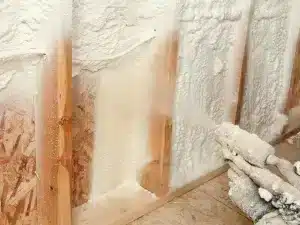
Insulation-related complaints may involve aldehydes, amines or other VOCs. The scope should not assume that formaldehyde is the only possible source.
Strong, sweet, pungent, solvent-like, resin-like or unexplained odors may require source review, ventilation assessment, formaldehyde-specific sampling, TO-15 / TO-15A VOC analysis or optional TIC screening depending on the suspected source.
Testing may support complaints involving new furniture, flooring, classroom materials, office fit-outs, portable buildings or inadequate ventilation.
Laboratories, mortuaries, health care settings, manufacturing, salons and other workplaces may require representative full-shift or short-term exposure monitoring.
Owners, buyers, boards, attorneys, insurers and facility managers may request independent measurements after construction or before occupancy.
Targeted formaldehyde, canister VOCs and expanded screening
The appropriate scope depends on the suspected source, property type, occupant or worker concern, ventilation conditions, sample duration, target compounds, required sensitivity, laboratory capabilities and intended comparison criteria.
Formaldehyde-specific air samples may be collected in selected rooms and submitted for laboratory analysis using a method appropriate to the project.
Active air sampling uses DNPH-treated silica-gel media with laboratory analysis by high-performance liquid chromatography with ultraviolet detection.
Whole-air samples may be collected in laboratory-prepared evacuated stainless-steel canisters and analyzed by GC/MS for the laboratory's calibrated VOC target list.
Read about canister VOC testingWhen offered by the laboratory, TIC review can screen non-target GC/MS peaks against a mass-spectral library to suggest possible additional compounds beyond the calibrated target list.
Read about TIC limitationsSelected projects may include formaldehyde together with acetaldehyde or other carbonyl compounds when the analytical method and source history support it.
Samples may be collected in rooms with cabinets, built-ins, furniture, flooring, insulation or other suspected materials and compared with other locations.
Testing may document selected indoor-air conditions after construction, renovation, furnishing or fit-out and before regular occupancy or after a complaint develops.
Personal breathing-zone or area samples may be designed for representative workers, tasks, full shifts, short-term exposures or specific formaldehyde-using processes.
The assessment may document windows, HVAC operation, outdoor-air delivery, exhaust, temperature, humidity and air movement that can affect concentrations.
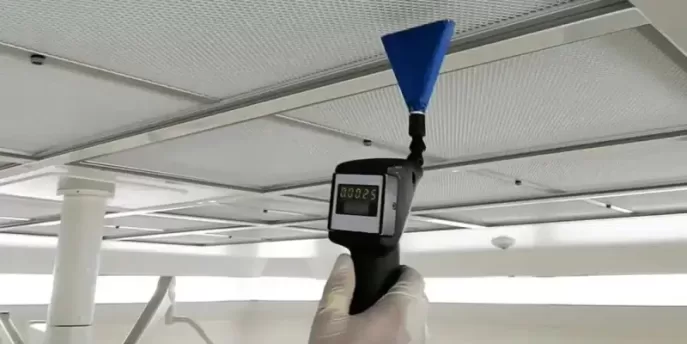
Screening instruments may help identify patterns or possible source areas, but cross-sensitivity and instrument limitations require cautious interpretation.
An outdoor or unaffected comparison sample may be useful when interpreting a broader VOC pattern, background sources or building-related concentration differences.
Reports may include the building history, methods, sample locations, conditions, calibrated target results, TIC findings when requested, limitations and next steps.
A reactive indoor air contaminant
Formaldehyde is a colorless, strong-smelling gas and a specific volatile organic compound. It is used in resins, adhesives, composite wood products, coatings, textiles, disinfectants, preservatives and many industrial processes. It is also produced by combustion and occurs at low levels in indoor and outdoor air.
Indoors, formaldehyde can be emitted from particleboard, medium-density fiberboard, hardwood plywood, cabinetry, furniture, flooring, wall systems, adhesives, finishes, fabrics and other products. Tobacco smoke and unvented combustion appliances can also contribute.
Because formaldehyde is a gas, its concentration cannot be determined by visual inspection. Odor may suggest that a chemical source is present, but odor strength does not identify the compound or provide a reliable concentration.
Emissions and measured concentrations may vary with the product, manufacturing process, material age, exposed surface area, temperature, relative humidity, ventilation, air exchange, room volume and recent installation.
Common indoor source categories
Particleboard, MDF, hardwood plywood, shelving, drawer components, furniture panels and other resin-bonded wood products.
Kitchen cabinets, bathroom vanities, closets, wall panels, built-ins, custom millwork and concealed composite components.
Laminate and engineered flooring, underlayment, adhesives, coatings and related installation products.
Desks, beds, wardrobes, shelving, upholstered furniture, mattresses, fabrics and permanent-press textile treatments.
Adhesives, sealants, coatings, paints, wall systems, insulation-related materials and stored construction products.
Tobacco smoke, gas appliances, kerosene heaters, fireplaces, vehicle exhaust and other combustion sources.
Formalin, tissue preservation, pathology, disinfection, specimen handling and related occupational processes.
Certain hair-smoothing or straightening products and heated salon processes may release formaldehyde.
Selecting the correct laboratory method
Designed specifically to measure formaldehyde using DNPH-treated sample media and HPLC/UV analysis.
Whole air is collected in a specially prepared canister and analyzed by GC/MS for compounds on the laboratory's validated and calibrated target list.
GC/MS scanning can provide additional information about non-target peaks. When the laboratory offers TIC review, library searching may suggest possible identities.
Whole-air canister sampling and GC/MS analysis
EPA TO-15 and the updated TO-15A describe collection of whole-air samples in specially prepared canisters followed by preconcentration and gas chromatography/mass spectrometry. Although developed for ambient-air applications, EPA TO-15A also recognizes applications such as indoor-air investigations when method performance requirements are met.
Air is collected into a laboratory-prepared, specially cleaned stainless-steel canister. Depending on the project and flow controller, the sample may represent a short grab period or a longer time-integrated interval.
The laboratory preconcentrates an aliquot of the air sample and uses GC/MS to separate, identify and quantify VOCs included on its calibrated target-analyte list.
TO-15 / TO-15A is not one fixed commercial panel. Laboratories may calibrate different compound lists and reporting limits. The requested list should be reviewed before sampling.
Canister VOC testing can support investigations involving solvents, fuels, coatings, adhesives, cleaners, furnishings, construction products and unexplained chemical odors.
The laboratory's calibrated target list determines which compounds receive compound-specific quantitative results. TIC review can broaden the screening value of the GC/MS data, but it does not convert every chromatographic peak into a confirmed identity or fully calibrated concentration.
Read our guide to EPA TO-15 VOC canister sampling, GC/MS and TIC analysis
Formaldehyde-specific sampling and laboratory analysis
We review the property, affected rooms, odors, installation dates, recent renovation, product information, ventilation, occupancy and testing objective.
Formaldehyde-specific DNPH sampling, broader TO-15 / TO-15A canister VOC testing, aldehyde analysis or a combined scope is selected before samples are collected.
Samples may be placed in bedrooms, kitchens, offices, classrooms, nurseries, source rooms, comparison areas or worker breathing zones.
Temperature, relative humidity, windows, HVAC operation, outdoor-air conditions, recent cleaning, product use and occupancy may be recorded.
Calibrated pumps, validated passive samplers or laboratory-prepared canister systems are used according to the selected method. Field blanks and chain-of-custody documentation may be included.
Laboratory results are reviewed with sample duration, reporting limits, target list, TIC findings when requested, building conditions, suspected sources and comparison data.
Source review, sampling and building conditions
Variables that can change indoor concentrations
Emissions from some materials can increase as temperature or humidity rises. Conditions during sampling should be documented and considered when comparing results collected on different days or seasons.
Open windows, exhaust fans, HVAC outdoor-air delivery, air exchange and room pressurization can dilute, redistribute or remove indoor formaldehyde.
Read about ventilation and carbon dioxideEmissions may be greatest after manufacture or installation and may decline over time, but the pattern depends on the product, coatings, exposed edges, room conditions and continued introduction of new materials.
A small room with extensive new cabinetry may differ from a larger room with fewer emitting surfaces. Sample location relative to the source can also affect results.
Fan operation, recirculation, filtration, closed doors and supply or return placement may affect distribution among rooms and floors.
View indoor air quality testingCleaning agents, fragrances, smoking, cooking, painting, stored chemicals and recent deliveries can affect odor and broader VOC results during the sampling period.
Workplace exposure criteria
OSHA defines the formaldehyde action level as 0.5 part per million, calculated as an eight-hour time-weighted-average concentration.
OSHA requires employers to prevent employee exposure above 0.75 ppm as an eight-hour time-weighted average.
OSHA’s short-term exposure limit is 2 ppm measured over a 15-minute period.
Occupational samples should represent the employee’s full-shift or short-term exposure and the relevant job classification, work area and shift.
Open OSHA 29 CFR 1910.1048OSHA criteria are workplace exposure limits designed for representative employee monitoring. They should not be presented as universal residential, school, daycare, pre-occupancy or medical pass/fail values. Non-occupational interpretation requires separate public-health, building and project context.
Indoor result interpretation
Formaldehyde results may be compared with selected occupational limits, public-health guidelines, green-building criteria, agency reference values or project-specific goals. Those values were developed for different populations, durations and purposes and are not automatically interchangeable.
EPA’s TSCA Title VI standards regulate formaldehyde emissions from specified composite wood products and finished goods. Product-emission compliance is not the same as a direct measurement of indoor air in a particular apartment, school or office.
A measured concentration should be evaluated with the sampling method, reporting limit, duration, temperature, humidity, ventilation status, product history, source loading, occupant use and comparison locations.
When an odor or complaint involves several possible chemicals, a formaldehyde result alone may not resolve the source. Additional VOC, aldehyde, combustion, ventilation, moisture or building-system evaluation may be needed.
Sampling and reporting process
We review the property, affected rooms, odor, new products, renovation history, ventilation, occupant or worker concern and documentation need.
Formaldehyde-only, aldehyde, EPA TO-15 / TO-15A VOC, optional TIC review, room comparison, workplace or combined indoor-air testing is selected for the project objective.
Materials, installation dates, odors, windows, HVAC operation, temperature, humidity, occupancy and source locations may be recorded.
Samples are collected at representative locations using the selected media, duration, flow rate, blanks and chain-of-custody procedures.
Laboratory results are reviewed with method sensitivity, calibrated VOC target lists, TIC findings when requested, building conditions, comparison areas and source information.
The agreed deliverable may include findings, laboratory reports, photographs, guideline context, limitations and recommended next steps.
Project documentation
Important limitations
Air samples represent selected locations, durations and conditions at the time of collection. Results can change with temperature, humidity, ventilation, occupancy, material age, source activity, cleaning, product use and building operation.
A low or non-detect result for one sample does not prove that formaldehyde or VOCs are absent from every room, cabinet, wall cavity, furnishing, HVAC zone, work task, product or future operating condition.
A formaldehyde-specific result does not identify every chemical that may contribute to an odor or complaint. Conversely, a broad VOC result should not be assumed to provide valid formaldehyde data unless the laboratory method supports that analyte.
TIC review can extend screening beyond a calibrated VOC target list, but TIC identities are tentative and estimated concentrations are not equivalent to compound-specific calibration. A significant TIC may require follow-up with a targeted analytical method or authentic reference standard.
Direct-reading sensors may respond to other gases or environmental conditions. Screening readings should not replace laboratory confirmation when compound-specific data are needed.
Product compliance with TSCA Title VI or another emission standard does not guarantee a particular indoor-air concentration after the product is installed in a specific room.
Environmental testing does not diagnose illness, establish individual dose, prove that formaldehyde caused a symptom or calculate an individual cancer risk. Medical concerns should be addressed by an appropriate health care professional.
Official formaldehyde and VOC resources
These official resources address indoor formaldehyde sources, composite-wood standards, NIOSH Method 2016, EPA TO-15 / TO-15A VOC canister methods, workplace exposure limits, New York indoor air and health information.
Federal information concerning pressed wood, furnishings, indoor sources, health effects, ventilation and ways to reduce exposure.
Open EPA indoor-air guidance EPA / TSCA Composite Wood Emission StandardsEPA requirements for hardwood plywood, medium-density fiberboard, particleboard and finished goods under TSCA Title VI.
Open EPA composite-wood resource EPA / NIOSH NIOSH Method 2016Formaldehyde collection on DNPH-treated media followed by HPLC analysis of the formaldehyde derivative.
Open Method 2016 EPA TO-15 and TO-15A VOC MethodsEPA compendium resources for whole-air canister collection and GC/MS analysis of volatile organic compounds, including the 2019 TO-15A update.
Open EPA VOC method resources OSHA Formaldehyde StandardWorkplace requirements for exposure monitoring, limits, regulated areas, controls, respiratory protection, training, medical surveillance and records.
Open OSHA 1910.1048 CDC / NIOSH NIOSH Pocket Guide: FormaldehydeChemical identity, physical properties, exposure limits, measurement methods, symptoms, target organs and protective information.
Open NIOSH Pocket Guide NYSDOH New York Indoor Air ResourcesState information concerning formaldehyde, VOCs, combustion gases, radon, mold, smoke and other indoor-air contaminants.
Open NYSDOH resource NCI Formaldehyde and CancerNational Cancer Institute information concerning occupational exposure, cancer research, routes of exposure and ways to reduce exposure.
Open NCI resourceExternal links are provided for public information. Their inclusion does not imply that any government agency endorses, certifies or is affiliated with Angstrom Testing Services LLC. Method selection, analyte lists, laboratory capabilities and guideline comparisons must be confirmed for the actual project and current requirements.
Regional indoor-air sampling
Angstrom provides formaldehyde air testing, VOC sampling and indoor air quality consulting throughout New York City, Long Island, Westchester, southern Connecticut, eastern New Jersey and nearby areas. Availability depends on the method, laboratory, required sensitivity, duration, access, urgency and reporting scope.
Serving Nassau County, Suffolk County, Queens and nearby Long Island communities.
View Rockville Centre location New York City Office Park Avenue, ManhattanServing Manhattan and residential, school, office, health care, commercial and institutional properties throughout all five boroughs.
View Manhattan location Westchester Office White Plains, NYServing White Plains and communities throughout lower, central and northern Westchester.
View White Plains locationSupporting formaldehyde and VOC resources
These supporting guides address two different informational questions: broader VOC canister testing and formaldehyde concerns involving cabinets, MDF and other engineered wood products.
Whole-air canister sampling, calibrated VOC target lists, GC/MS analysis, tentatively identified compounds and important interpretation limitations.
Read VOC guide Cabinets, MDF & Engineered Wood Formaldehyde From Cabinets, MDF & Engineered WoodHow cabinets, MDF, particleboard, hardwood plywood, furniture and other engineered wood products may contribute formaldehyde to indoor air.
Read formaldehyde guideFormaldehyde and VOC testing FAQs
Formaldehyde air testing measures formaldehyde in a selected air sample. It may be used for concerns involving cabinets, furniture, flooring, renovation materials, workplaces, chemical odors or pre-occupancy conditions.
NIOSH Method 2016 collects formaldehyde on DNPH-treated silica gel. The formaldehyde derivative is analyzed by high-performance liquid chromatography with ultraviolet detection.
TO-15 and TO-15A are EPA whole-air methods that use specially prepared canisters followed by preconcentration and GC/MS analysis. The laboratory quantitatively reports compounds included on its calibrated target list.
TICs are additional non-target GC/MS peaks that a laboratory may evaluate by comparing mass spectra with a reference library. The resulting identification is tentative and the concentration is generally an estimate rather than a compound-specific calibrated result.
It can broaden the screening value of the GC/MS data by flagging some compounds outside the calibrated target list when they produce suitable chromatographic and mass-spectral information. It does not identify every VOC, and important findings may require targeted confirmation.
No. Formaldehyde is one specific compound that commonly benefits from a formaldehyde-specific DNPH method. TO-15 / TO-15A testing evaluates a broader group of VOCs using canister sampling and GC/MS.
Canister methods can present additional analytical challenges for formaldehyde, and laboratory target lists and method performance vary. When formaldehyde is the primary concern, a dedicated DNPH/HPLC method such as NIOSH 2016 is generally preferred unless the laboratory has demonstrated suitable canister performance.
Not necessarily. Direct-reading sensors may be useful for screening or source patterns, but cross-sensitivity and environmental effects can limit specificity. Laboratory sampling is preferred when defensible compound-specific data are needed.
There is no single universally accepted residential pass/fail level. Results may be compared with selected public-health or building guidelines, but the duration, population, method and purpose of each value must be considered.
OSHA’s formaldehyde criteria are occupational exposure limits based on representative employee monitoring. They should not be presented as universal residential, school, daycare or medical clearance values.
Testing can narrow possible sources, but odor investigations often require building-history review, source inspection, ventilation observations, formaldehyde-specific sampling and broader VOC analysis. TIC review can add screening information when the routine target list does not explain the odor.
Yes, when included in the agreed scope. Documentation may include the project history, sample methods and locations, indoor conditions, formaldehyde results, calibrated VOC targets, TIC findings when requested, comparison context, limitations, photographs and recommendations.
Angstrom provides formaldehyde and VOC air testing in New York City, Long Island, Westchester, southern Connecticut, eastern New Jersey and nearby areas. Availability depends on the method, duration, laboratory, access, urgency and scope.
Discuss the odor, product or indoor-air concern
Describe the property type, affected rooms, new cabinets, furniture, flooring, spray foam, renovation materials, odor history, ventilation conditions, workplace process and whether you need NIOSH 2016 formaldehyde testing, EPA TO-15 / TO-15A canister VOC analysis, optional TIC screening or a written report.

Certified Industrial Hygienist
Indoor Air Quality Association
Board for Global EHS Credentialing
IICRC Certified
Rockville Centre Chamber Member