Lead Dust Wipe Sampling, Result Interpretation & Current Regulatory Context
Lead Dust Testing: Dust Wipes, Results & NYC/EPA Standards
Lead dust testing measures lead loading on selected floors, window sills, window wells or troughs and other surfaces. The result is most useful when the sampled area, surface type, renovation history, paint condition and purpose of the testing are clearly documented.

What lead dust testing actually measures
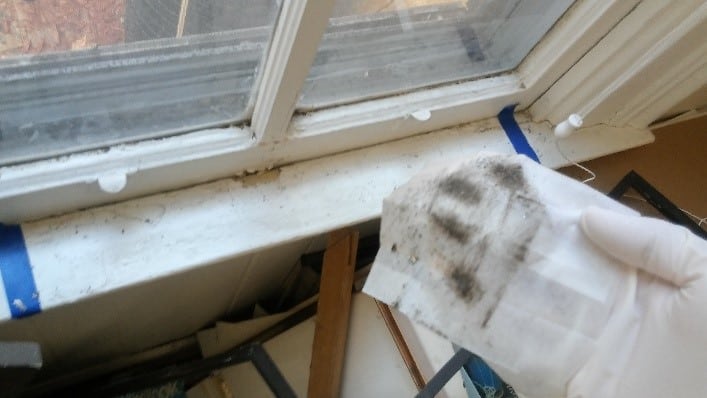
Lead Dust Can Be Invisible Even When a Surface Looks Clean
Lead dust is fine particulate material containing lead. In older buildings, common sources include deteriorated lead-based paint, friction and impact surfaces, sanding, scraping, demolition, window replacement, renovation debris and contaminated soil tracked indoors.
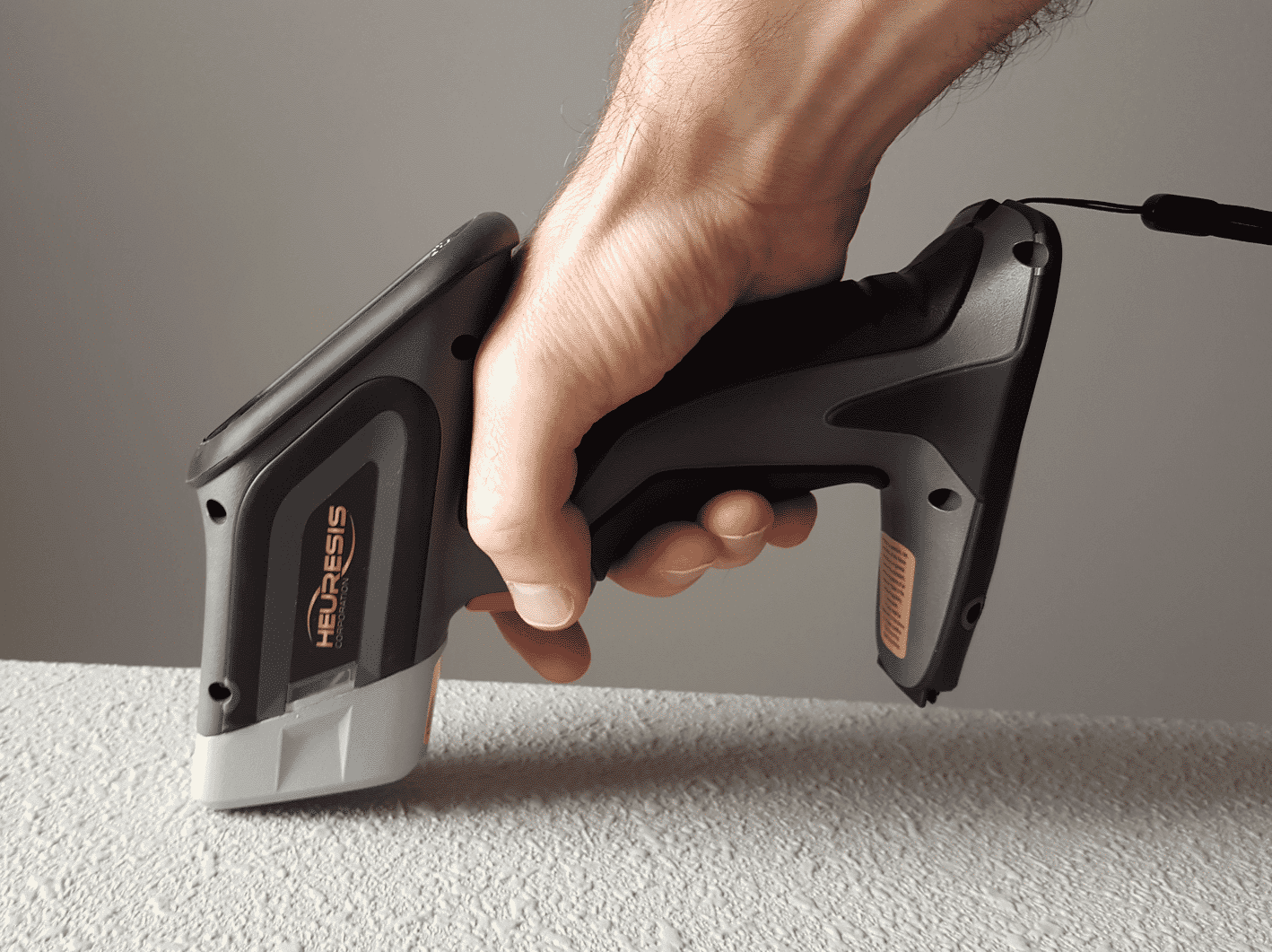
Dust wipe sampling is different from XRF paint testing. XRF testing evaluates lead in painted building components. A dust wipe evaluates lead contained in the settled dust collected from a measured surface area.
The laboratory result is generally expressed as micrograms of lead per square foot (µg/ft²), so the dimensions of the sampled area are part of the result—not merely a field note.
For project-specific inspection, XRF testing, dust-wipe testing and lead risk assessment services, see our Lead Paint Testing & Lead Risk Assessments service page.
Lead dust is not evenly distributed
Where Lead Dust Commonly Collects
Sampling locations should be selected for the actual objective. A few convenient wipes do not necessarily answer the same question as a formal risk assessment, renovation investigation or clearance examination.
Interior Window Sills
Painted windows are frequent friction and impact surfaces. Sills can receive dust generated by window operation and deterioration of nearby paint.
Window Wells or Troughs
Wells and troughs can accumulate paint chips, exterior dirt and settled dust and may be required sampling locations in certain clearance protocols.
Floors
Floors collect dust from painted surfaces, renovation activities, shoes, soil tracking, furniture movement and normal building activity.
Stairs & Landings
Wear, impact and deteriorated paint on stairs, railings and adjacent trim can contribute to settled dust in circulation areas.
Renovation Areas
Dust may be concentrated near sanding, scraping, drilling, demolition, window work and disturbed painted components.
Adjacent Rooms
Dust can migrate beyond the work area through foot traffic, air movement, open doorways, contents and inadequate containment.
From field collection to laboratory result
How Lead Dust Wipe Sampling Works
The exact protocol depends on whether the project is general environmental screening, a risk assessment, renovation-related testing, a regulatory investigation or formal clearance.
Select the Surface
Floors, sills, wells, troughs or other locations are selected according to the purpose of the investigation and applicable protocol.
Measure the Area
The sampled dimensions are measured and recorded so the laboratory mass of lead can be expressed as an area-based loading.
Collect the Wipe
The defined surface is wiped using appropriate sampling media and a collection technique suitable for lead dust analysis.
Document the Sample
Room, component, surface type, dimensions, sample ID and relevant site conditions should be recorded.
Laboratory Analysis
The wipe is analyzed by a laboratory meeting the qualifications required for the particular federal, state, city or project program.
Interpret the Result
The reported loading is compared with the correct criterion for the surface, project type, jurisdiction and date of the work.
Understanding the units
What Does µg/ft² Mean on a Lead Dust Report?
A dust-wipe result is an area loading. The laboratory determines the amount of lead recovered from the wipe, and that mass is related to the measured surface area. This allows samples from different-sized surfaces to be expressed on a common square-foot basis.
The Basic Calculation
A 12-inch × 12-inch area equals 1 ft². A narrower window sill may have a smaller measured area, so accurate dimensions are especially important.
Simple Example
Suppose a wipe contains 10 µg of lead and was collected from a sill measuring 3 inches × 24 inches.
- 3 × 24 = 72 square inches
- 72 ÷ 144 = 0.5 square feet
- 10 µg ÷ 0.5 ft² = 20 µg/ft²
This example explains the arithmetic only. Whether 20 µg/ft² has regulatory significance depends on the surface type and the specific program or project.
“Non-detect” does not mean mathematically zero.
A non-detect or result below a reporting limit means the laboratory did not report lead above the applicable analytical reporting criterion for that sample. The reporting or quantitation limit should be reviewed when interpreting very low results.
The same dust wipe can serve different project objectives
Risk Assessment Sampling vs. Clearance Testing
Risk Assessment / Hazard Investigation
The purpose is to determine whether lead hazards are present and to help identify where those hazards may be located.
- May include paint testing and dust sampling
- Sampling locations are selected to identify potential hazards
- Building age, paint condition and occupancy matter
- Federal dust-hazard identification now uses dust-lead reportable levels
- Results are interpreted as part of the broader risk assessment
Post-Work / Post-Abatement Clearance
The purpose is to determine whether the work area meets the applicable post-work dust criteria after required cleaning and visual review.
- Occurs after specified work and cleaning
- Required locations may be dictated by the applicable protocol
- Independent third-party testing may be required
- Results are compared with applicable action or clearance levels
- Failed locations may require recleaning and retesting
Do not apply a clearance number to every lead-dust question.
A general environmental screening sample, a formal federal risk assessment, an NYC post-work clearance sample and a child environmental investigation may be governed by different sampling rules and decision criteria. The project objective should be established before sampling begins.
Regulatory context reviewed August 2026
Current EPA and NYC Lead Dust Reference Context
Lead requirements can depend on the jurisdiction, building type, work activity, program and purpose of sampling. The values below summarize key federal and NYC concepts relevant to this article; the controlling rule should always be checked for the actual project.
Federal EPA — Dust-Lead Reportable Level
For covered residential dwellings and child-occupied facilities, EPA's federal framework treats lead dust on floors or interior window sills as a dust-lead hazard when a sample contains any reportable level of lead, as analyzed under the applicable federal program.
EPA uses the term dust-lead reportable level (DLRL) for hazard identification. This is distinct from the post-abatement action levels below.
Federal EPA — Post-Abatement Action Levels
On and after January 12, 2026, EPA's federal dust-lead action levels (DLAL) for post-abatement testing are:
Floors
Interior Window Sills
Window Troughs
New York City — Current Published Clearance Levels
The currently published NYC Health Code Article 173 lists the following levels for permanent re-occupancy after covered lead work:
Floors
Window Sills
Window Wells
NYC Requirements Are Project-Specific
NYC Health Code requirements also address how clearance testing is performed for covered work, including specified wipe locations and third-party independence in certain circumstances.
HPD, DOHMH, daycare, school, housing, abatement and other project types may involve additional rules. Confirm the applicable requirement before treating a laboratory number as a legal pass/fail determination.
A laboratory number needs surface and project context
How to Interpret Lead Dust Wipe Results
Review the laboratory result together with the sample location, surface type, dimensions, reporting limit, renovation history, paint condition and purpose of the sampling.
A Dust Wipe Result Can Help Document
- Lead loading on the specific sampled surface
- Differences among project-specific locations
- Whether selected post-work surfaces meet the applicable criterion
- Whether a renovation or dust reservoir warrants further investigation
- A documented environmental condition at the time of sampling
A Dust Wipe Result Does Not Automatically Establish
- The condition of every unsampled room or surface
- The exact painted component that produced the dust
- Whether lead-based paint is present without separate paint testing
- A person's absorbed dose or blood lead level
- Medical diagnosis or individual health causation
- That the whole property passes because one location is low
Surface type matters.
A floor result should be compared with the applicable floor criterion, and a sill, well or trough result with the criterion applicable to that component. Do not compare unlike surfaces or unlike project types as though they were interchangeable.
Renovation can spread very fine lead-containing dust
Lead Dust After Renovation, Repair or Painting
Window replacement, door work, sanding, scraping, drilling, demolition and other activities can disturb older painted surfaces. If lead-based paint is present, inadequate containment or cleaning can allow dust to migrate to floors, sills, furniture, contents and adjacent rooms.
Post-renovation sampling should be designed around the actual work area, migration pathways and regulatory purpose. If formal clearance is required, the mandated sampling and personnel requirements should be followed rather than substituting an informal set of wipes.
Lead dust concerns before renovation may also overlap with asbestos testing and other pre-disturbance environmental assessments.
Important sampling limitations
Why One Dust Wipe Cannot Describe an Entire Property
Location-Specific
A wipe represents the selected surface and area. An unsampled bedroom, hallway, sill or work zone may have a different dust loading.
Time-Specific
Cleaning, renovation, occupancy, window operation, soil tracking and additional paint disturbance can change dust conditions after sampling.
Not Source Identification by Itself
A wipe documents lead in dust but does not by itself prove which painted component, soil source or work activity produced the lead.
Environmental testing is not medical testing.
Dust-wipe results can document environmental lead on selected surfaces. Blood lead testing, diagnosis and medical interpretation should be handled by qualified health care professionals.
Related Angstrom resources
Lead Paint, Water, Renovation & Indoor Environmental Testing
Official regulatory and technical resources
EPA, eCFR & New York City Lead Dust References
EPA overview of dust-lead reportable levels, dust-lead action levels and the 2024 reconsideration rule.
Open EPA resource eCFR 40 CFR § 745.227Federal work-practice standards for inspections, risk assessments, abatement and post-abatement dust-lead testing.
Open current regulation NYC Health Health Code Article 173Current published NYC Health Code provisions addressing lead-based paint work practices and lead-contaminated dust clearance.
Open Article 173 NYC DOHMH — 2026 Notice Proposed Article 173 Lead Dust AmendmentsMay 2026 proposal concerning lower lead-contaminated-dust thresholds and laboratory qualification changes.
Open proposed rule noticeLead dust testing questions
Frequently Asked Questions
What is lead dust wipe testing?
Lead dust wipe testing collects settled dust from a measured surface for laboratory lead analysis. Results are generally expressed as micrograms of lead per square foot (µg/ft²).
Is lead dust testing the same as XRF lead paint testing?
No. XRF testing evaluates lead in painted building components. Dust-wipe testing measures lead in the settled dust collected from selected surfaces.
What are EPA's federal post-abatement dust-lead action levels in 2026?
On and after January 12, 2026, the federal action levels in 40 CFR § 745.227 are 5 µg/ft² for floors, 40 µg/ft² for interior window sills and 100 µg/ft² for window troughs. These are post-abatement action levels and should not be confused with EPA's dust-lead reportable level used for hazard identification.
What does “any reportable level” mean under the current EPA rule?
For the covered federal dust-hazard identification framework, a floor or interior window-sill sample is considered a dust-lead hazard when lead is present at any reportable level under the applicable laboratory and program requirements. This is conceptually different from the numerical post-abatement action levels.
What are the currently published NYC clearance levels?
NYC Health Code Article 173 currently lists 5 µg/ft² for floors, 40 µg/ft² for window sills and 100 µg/ft² for window wells for the clearance provision discussed in this article. NYC proposed lower thresholds in May 2026, so the rule in effect on the date of a project should be verified.
Does a low result in one room prove the whole property is clear?
No. A dust wipe represents the sampled surface and location. Other rooms, sills, floors, work areas or unsampled components may have different lead-dust loadings.
Does a non-detect result mean there is absolutely no lead?
Not necessarily. The laboratory reporting or quantitation limit matters. A non-detect indicates that lead was not reported above the applicable analytical reporting criterion for that sample.
Can lead dust testing determine whether someone has lead poisoning?
No. Environmental dust testing documents lead on sampled building surfaces. Blood lead testing, diagnosis and medical interpretation should be handled by qualified health care professionals.
Need Site-Specific Lead Dust Testing?
Tell us about the building age, renovation history, deteriorated paint, window conditions, affected rooms and whether the project involves general screening, risk assessment, post-work testing, clearance or regulatory documentation.
Request lead dust wipe testing
Tell Us About the Lead Dust Concern
Use the form below to describe the property type, location, building age, renovation or paint-disturbance history, rooms of concern, child-occupied areas, HPD or agency documentation needs and whether you need dust wipes, XRF paint testing, risk assessment or post-work clearance.