Cell Tower RF Exposure, Measurement and Health Context
Cell Tower RF Exposure and Cancer Concerns: What Testing Can and Cannot Tell You
People often ask whether a nearby cell tower or rooftop antenna creates a health concern at a particular apartment, home, school or workplace. RF field measurements can document conditions at selected locations and, when the measurement method supports it, provide comparison with applicable FCC exposure criteria. They cannot diagnose illness or determine whether RF caused an individual medical condition.
Article summary
The Practical Answer
Radiofrequency energy used by cellular and other wireless systems is non-ionizing electromagnetic radiation. It differs from ionizing radiation such as x-rays because individual RF photons do not have enough energy to ionize atoms or directly damage DNA in the way ionizing radiation can.
Human cancer research on wireless-phone RF exposure has not established a clear causal relationship, while animal studies and past hazard classifications remain part of the broader scientific record. The appropriate role for environmental testing is narrower: measure the RF field at the property, explain the method, compare results with appropriate exposure criteria when technically supported, and state what the measurements do not establish.
For site-specific measurement services, visit RF Exposure Testing for Cell Towers and Rooftop Antennas .
Site-specific questions
Why People Are Concerned About Cell Tower RF Exposure
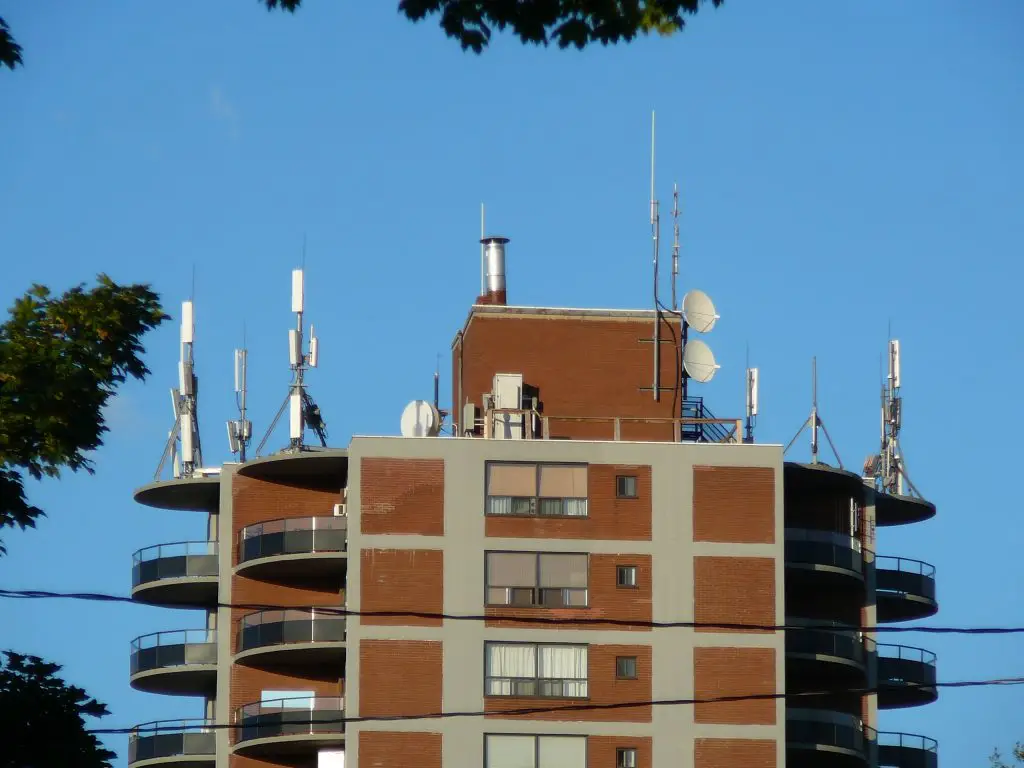
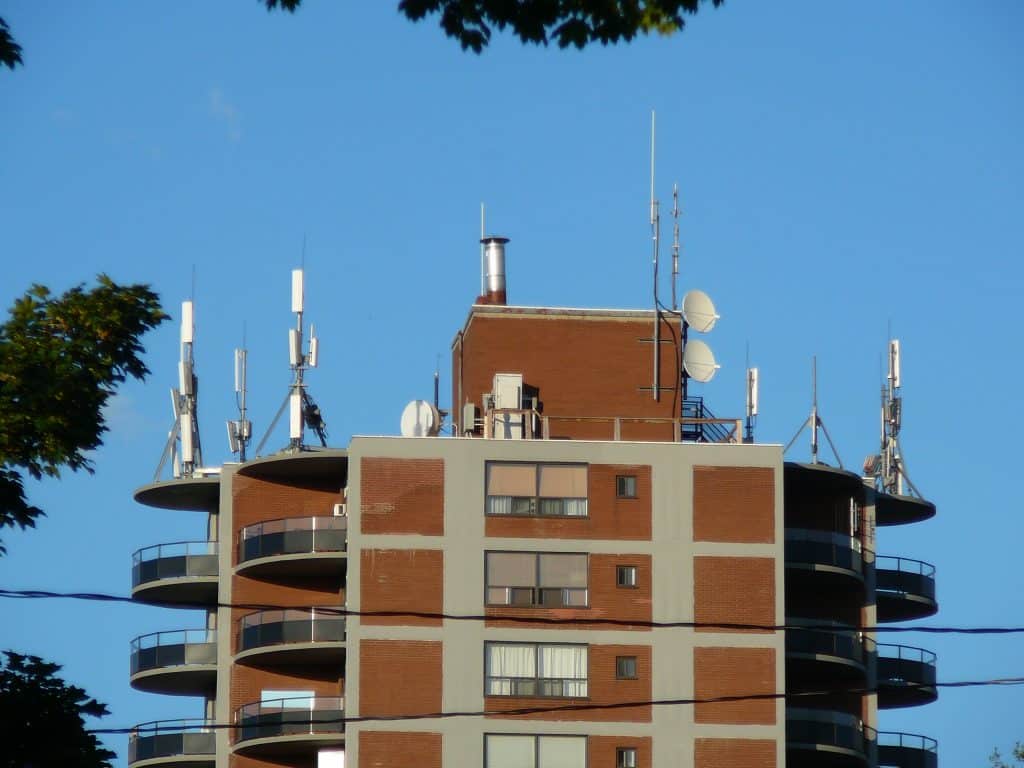
Cell towers, rooftop cellular antennas, small cells and other wireless infrastructure are visible sources of radiofrequency energy. Concerns are especially common when antennas are installed on the same building, near a bedroom or balcony, above an occupied floor, next to a school or near an accessible rooftop work area.
A map or distance estimate cannot by itself tell you the RF level inside a particular room. Antenna direction, height, downtilt, operating frequency, power, line of sight, windows, walls, reflections, shielding, rooftop structures and network conditions can all influence measured values.
That is why a site-specific question is best answered with measurements at the locations actually being evaluated rather than assumptions based only on how close a tower appears.
Electromagnetic spectrum
What Is Radiofrequency Energy?
Radiofrequency radiation is electromagnetic energy used by cellular systems, Wi-Fi, radio, television, public-safety communications, microwave links and many other wireless technologies.
RF is non-ionizing radiation. That means individual RF photons do not carry enough energy to ionize atoms. This distinguishes RF from ionizing radiation such as x-rays and gamma rays.
At sufficiently high exposure levels, absorption of RF energy can heat tissue. RF exposure standards use frequency-dependent dosimetric and field criteria to control exposure. Environmental field surveys typically measure electric-field strength, power density or another appropriate RF metric depending on the instrument, frequency and measurement objective.
Health evidence requires context
What Cancer Research Says About Radiofrequency Exposure
Cancer questions should not be reduced to either “RF definitely causes cancer” or “a low meter reading proves there is no cancer risk.” Neither statement is supported by what an environmental field measurement actually establishes.
The National Cancer Institute reports that brain and central nervous system cancer incidence has remained generally stable during the period in which cell-phone use increased dramatically. NCI also notes that the International Agency for Research on Cancer classified radiofrequency electromagnetic fields as possibly carcinogenic to humans in 2011, based on limited evidence and with important uncertainty.
The National Toxicology Program studied high, whole-body exposures to 2G- and 3G-type radiofrequency radiation in rats and mice. NIEHS reports tumor findings in some exposed male rats, while also emphasizing that the exposure levels and whole-body conditions differed from typical human cell-phone exposure and that the studies did not evaluate 4G, 5G or Wi-Fi technologies.
What this means for environmental testing
A property survey can document RF field conditions at selected locations. It cannot reproduce an epidemiologic study, calculate a person's lifetime absorbed dose, determine whether a disease was caused by RF exposure, or predict individual cancer risk.
Environmental measurement
What RF Exposure Testing Can Tell You
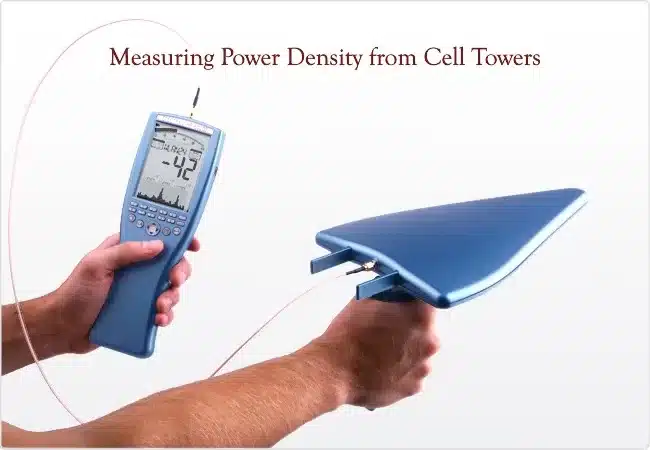
RF testing is useful when the question concerns the field present at a specific location during the survey. Representative measurements may be collected in bedrooms, living rooms, offices, classrooms, balconies, terraces, rooftops, exterior areas and maintenance routes.
Measured RF Levels
Document field strength or power density at selected, identified locations.
Location Comparisons
Compare antenna-facing rooms, interior areas, balconies, rooftops and exterior areas.
Higher-Reading Areas
Identify accessible locations where measured levels are higher than surrounding locations.
FCC Context
Compare measurements with exposure criteria when the instrument and scope support it.
Property Documentation
Provide measurement locations, instrument information, photographs and interpretation.
Follow-Up Planning
Support decisions about additional measurement, source clarification or access controls.
Common scenarios
When Someone May Request RF Testing
- Cell antennas are visible from an apartment, office, balcony or roof.
- Wireless equipment is installed on the same building.
- A school, daycare or office is near rooftop antennas.
- A buyer or tenant wants measurements before signing a lease or purchasing property.
- A property owner wants baseline or post-installation measurements.
- Workers access roof areas near transmitting equipment.
- A board, manager or attorney needs independent documentation.
- Occupants want measured data rather than a distance estimate alone.
Measurement method
Broadband RF Measurement vs. Frequency-Selective Analysis
The type of instrument determines what the result can tell you. This distinction matters when interpreting a cell tower or rooftop antenna survey.
Broadband RF Survey
A broadband probe measures the combined RF field within its specified frequency response. It is useful for screening occupied areas, comparing locations and documenting total-field conditions.
It generally does not identify which carrier, antenna, frequency band or service contributed to the measured total.
Frequency-Selective Analysis
Frequency-selective equipment separates portions of the RF spectrum and can provide more information about individual bands or sources.
It may be needed when the project requires carrier attribution, frequency-by-frequency compliance evaluation or identification of a specific transmitter's contribution.
Federal exposure criteria
How FCC RF Exposure Criteria Fit Into a Field Survey
The FCC's RF exposure rule is contained in 47 CFR § 1.1310. Maximum permissible exposure criteria are frequency dependent. The rule distinguishes between general-population/uncontrolled exposure and occupational/controlled exposure.
A technically valid comparison must consider the measured frequencies, instrument response, units, averaging approach and whether multiple RF sources materially contribute. A broadband meter can be useful, but a more detailed frequency-selective evaluation may be necessary for some compliance questions.
FCC comparison is not a medical diagnosis.
Comparing a measured field with an exposure criterion answers a technical or regulatory question about the measured conditions. It does not determine whether RF caused a symptom, predict an individual's cancer risk or establish that every future operating condition will be identical.
Interpretation boundaries
What RF Testing Cannot Tell You
It Does Not Diagnose Symptoms
RF testing cannot determine the medical cause of headaches, sleep problems, dizziness, fatigue or other symptoms.
It Is a Measurement in Time and Place
Results represent selected locations and conditions during the survey. Network traffic, antenna configuration and operating conditions can change.
One Reading Is Not the Whole Property
RF fields can vary by room, floor, balcony, rooftop position, probe height, wall construction, reflections and antenna geometry.
A broadband instrument also cannot evaluate frequencies outside its specified response, and a combined-field result normally cannot identify individual carrier or band contributions without frequency-selective analysis.
Reading the report
How to Interpret RF Test Results
The most useful RF report explains more than the displayed meter value. It should identify where measurements were collected, what instrument and probe were used, the frequency range, the units, the measurement function or averaging procedure and important site conditions.
A bedroom measurement, balcony measurement, rooftop access-area measurement and reading near the front of an antenna can represent very different exposure conditions. Location and use of the space should therefore remain part of the interpretation.
If the report compares results with FCC criteria, it should also explain which exposure category was used and why, and whether the measurement method adequately represents the frequencies involved.
Primary government sources
Official RF Exposure and Health References
Federal RF exposure, compliance and public guidance resources.
eCFR / FCC 47 CFR § 1.1310 — Radiofrequency Exposure LimitsCurrent federal RF exposure limits and exposure categories.
National Cancer Institute Cell Phones and Cancer RiskNCI review of RF energy, human epidemiologic research and cancer evidence.
NIEHS / NTP Cell Phone Radio Frequency RadiationSummary of National Toxicology Program animal studies and their limitations.
Need property-specific measurements?
View Angstrom's RF Exposure Testing Services
This article explains RF exposure and health concerns generally. Questions about a particular apartment, home, school, office, rooftop, balcony or nearby antenna require measurements at the actual property and locations of concern.
Angstrom provides independent radiofrequency field measurements, power-density testing, occupied-space surveys, rooftop assessments and written RF exposure reports.