Independent Mold Assessment and Post-Remediation Evaluation
Mold Clearance Inspections & Post-Remediation Verification
Independent post-remediation inspections for homes, apartments, offices, schools and commercial properties. Clearance evaluates the condition of the remediated area against the project scope, visible cleanliness, moisture conditions, source correction and selected mold sampling when appropriate.
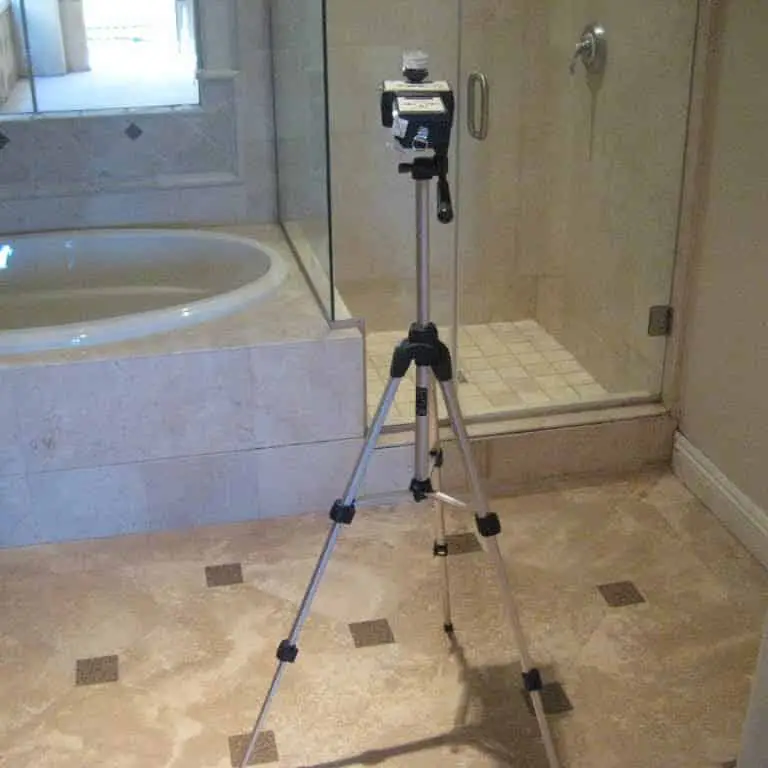
Independent post-cleanup evaluation
What Is a Mold Clearance Inspection?
A mold clearance inspection, also called post-remediation verification or a post-remediation assessment, is performed after the remediation contractor has completed the agreed mold cleanup work and before the project is treated as complete.
The purpose is not simply to collect an air sample. A defensible clearance evaluates whether the conditions required by the remediation plan or project scope have been addressed. Depending on the project, that may include source correction, removal of affected materials, visible cleanliness, moisture conditions, dust and debris, odors, containment status and targeted sampling.
Angstrom provides mold assessment, remediation planning, sampling and post-remediation evaluation. Angstrom does not perform mold remediation, demolition, cleanup, reconstruction or restoration contracting.
For general mold inspection and testing services, visit our Mold Testing & Inspection page .
Project-specific post-remediation criteria
What We Evaluate During Mold Clearance
Clearance criteria should be connected to the actual remediation plan, affected materials, moisture source, building conditions and intended documentation. No single mold-spore number substitutes for this evaluation.
Visible Mold and Damaged Materials
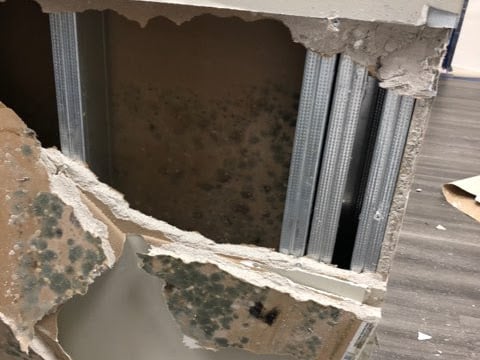
Accessible areas are reviewed for remaining visible fungal growth, water-damaged materials, staining that requires further evaluation, and incomplete removal.
Moisture Conditions
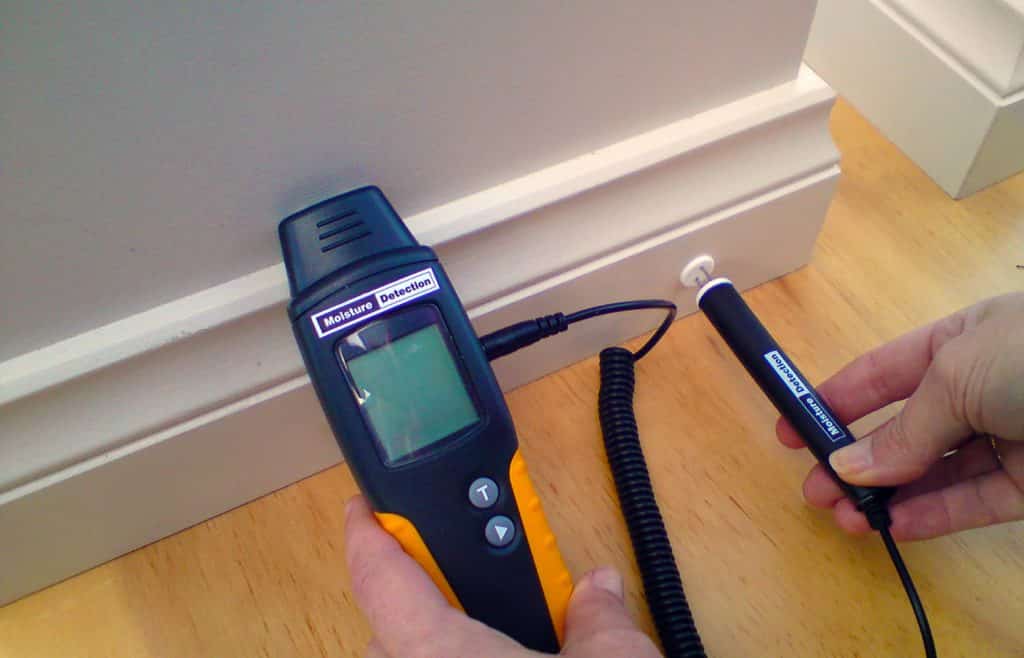
Moisture readings, relative humidity, active leaks, condensation, damp materials and drying status are considered in relation to the material and known source.
Moisture-Source Correction
The assessment considers whether the leak, condensation, drainage, plumbing, roofing, envelope or HVAC condition that contributed to mold growth has been addressed or otherwise documented.
Dust, Debris and Cleanliness
Remediated surfaces and work areas are reviewed for visible dust, demolition debris, residual contamination and conditions inconsistent with final cleaning.
Odor Observations
Persistent musty or mold-like odors may indicate an unresolved source, remaining damp materials, concealed growth or incomplete cleaning and should be investigated rather than ignored.
Selected Mold Sampling
Air or surface samples may be added when they help evaluate selected post-cleanup conditions, compare remediated and reference areas or satisfy project-specific documentation requirements.
From contractor completion to clearance documentation
How a Post-Remediation Verification Is Performed
Review the Assessment and Remediation Scope
We review the affected areas, moisture source, remediation plan or protocol, contractor scope, prior testing and project-specific clearance criteria.
Inspect the Remediated Area
Accessible surfaces, wall and ceiling openings, framing, floors, cavities, containment areas and adjacent conditions are reviewed as appropriate to the project.
Evaluate Moisture and Source Correction
Moisture readings, humidity, leak repairs, drainage, condensate and other source conditions are reviewed where relevant. A dry surface reading does not by itself prove that every concealed assembly is dry.
Review Cleanliness and Remaining Materials
Remaining dust, debris, suspect visible growth, damaged porous materials, incomplete cleaning and other observable conditions are documented.
Collect Targeted Samples When Appropriate
Depending on the plan and project objective, indoor and outdoor air samples, surface samples or other targeted samples may be collected after the visual and moisture evaluation.
Issue the Clearance Findings
The final documentation identifies the areas reviewed, conditions observed, sample results when applicable, limitations and whether the inspected conditions meet the project-specific post-remediation criteria or require additional corrective work.
Inspection, moisture and remediation context
Clearance Is More Than a Laboratory Number
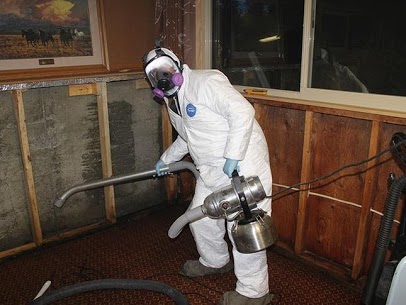
Air and surface sampling after remediation
How Mold Sampling Fits Into Clearance
Mold samples can provide useful post-remediation information, but there are no EPA or other federal threshold limits for mold or mold spores in indoor air. Results therefore should not be presented as compliance with a universal federal mold standard.
When Air Sampling May Be Useful
Air samples may be useful when the remediation plan calls for them, when comparison with outdoor or unaffected areas will help evaluate the post-cleanup condition, or when project documentation requires sampled data.
- Remediated work area
- Adjacent or comparison location
- Outdoor reference sample when appropriate
- Documented sampling conditions
- Interpretation with visual findings
What a Sample Cannot Prove
A short-duration sample represents one location and time. It cannot prove that every concealed cavity, HVAC component, floor assembly or future operating condition is free of mold.
- Does not replace inspection
- Does not correct remaining wet materials
- Does not override visible contamination
- Does not establish medical causation
- Does not create a federal pass/fail mold standard
Outdoor comparison is useful context, not a universal mathematical formula.
Indoor and outdoor fungal populations can vary with season, weather, vegetation, windows, ventilation, sample timing and other conditions. Interpretation should consider the overall fungal profile, dominant indoor organisms, field observations, remediation history and the specific clearance criteria established for the project.
New York mold assessment and remediation roles
Independent Assessment and Remediation Are Separate Functions
New York State's Mold Program establishes licensing requirements and minimum work standards for covered mold assessment and remediation work. The program separates the assessment role from the remediation role to reduce conflicts of interest.
Mold Assessor
The assessor evaluates the property and, when applicable, develops the mold remediation plan and project-specific clearance criteria.
NYS Department of Labor Mold ProgramRemediation Contractor
A separate remediation contractor performs the actual mold cleanup work and prepares the remediation work plan required for covered projects.
NYS assessment and remediation guidancePost-Remediation Assessment
After remediation, the assessor may evaluate whether the project-specific criteria have been satisfied and complete applicable post-remediation documentation.
NYC DEP mold abatement informationRegulatory applicability depends on the property, project size, location and other facts. NYC projects may also be subject to additional indoor-allergen, filing or certification requirements. Requirements should be confirmed for the specific project.
Why a project may need additional work
Common Reasons a Mold Clearance Inspection Does Not Meet the Project Criteria
Visible Growth Remains
Suspect visible fungal growth remains on framing, drywall, subfloor, insulation, HVAC materials, contents or other surfaces.
Wet or Damp Materials Remain
Materials are still damp, the source has not been corrected or drying has not been adequately demonstrated.
Dust or Debris Is Present
Heavy settled dust, demolition residue, contaminated debris or inadequate final cleaning remains within the remediated area.
Scope Was Incomplete
Affected materials identified in the assessment or remediation plan were not removed, cleaned or otherwise addressed as required.
Odor or Hidden-Source Concern Remains
A persistent musty odor or other evidence suggests that a concealed source, adjacent area or building system may need further evaluation.
Sample Results Need Follow-Up
When post-remediation sampling is part of the scope, the fungal profile or selected result may warrant additional cleaning, investigation or repeat sampling after corrective work.
If clearance criteria are not met
The findings should identify the observed deficiency or sampled condition so the remediation contractor can address the remaining work. A follow-up inspection or repeat sampling may then be performed as appropriate. Angstrom does not perform the corrective remediation work.
What happens before clearance
What Mold Remediation Generally Addresses
Mold remediation is performed by the remediation contractor, not by Angstrom. The required work depends on the assessment, affected materials, extent of contamination, moisture source and applicable project requirements.
Depending on the project, remediation may include controlled removal of affected porous materials, cleaning of remaining structural surfaces, HEPA vacuuming, damp wiping, containment, air filtration, debris management and other methods specified in the remediation plan and contractor work plan.
Coatings or sealants should not be treated as a substitute for removing visible mold or correcting the underlying moisture problem. The objective is to correct the source and properly address affected materials before reconstruction conceals the work area.
Related Angstrom mold resources
Mold Inspection, HVAC and Mycotoxin Resources
Government mold guidance
Official Mold Assessment and Remediation Resources
Licensing requirements and minimum work standards for mold assessment and remediation professionals in New York.
Open NYS Mold Program U.S. EPA Mold Testing or SamplingEPA guidance explaining that no federal mold-spore threshold limits have been established and discussing when sampling may be useful.
Open EPA sampling guidance U.S. EPA Mold Remediation in Schools and Commercial BuildingsEPA guidance on moisture correction, remediation practices and post-remediation evaluation.
Open EPA remediation guide NYC Health New York City Mold InformationCity information on mold, moisture, health concerns and New York licensing requirements for mold assessment and remediation.
Open NYC Health resourceMold clearance questions
Frequently Asked Questions
What is a mold clearance inspection?
It is a post-remediation evaluation performed after mold cleanup to determine whether the inspected conditions meet the remediation plan or project-specific clearance criteria.
Is post-remediation air testing always required?
Not every project requires the same samples. Air testing may be included when required by the remediation plan, useful for comparison, requested for documentation or otherwise appropriate to the project objective. Visual inspection and moisture evaluation remain important.
What mold-spore count passes clearance?
There is no EPA or other federal universal threshold for indoor mold spores. Post-remediation results should be interpreted with the project criteria, outdoor or comparison samples when appropriate, the fungal profile and the inspection findings rather than a single universal count.
Should the remediation contractor perform the clearance inspection?
For covered New York projects, assessment and remediation are separate licensed functions. Independent post-remediation assessment helps avoid the conflict created when the same party that performed cleanup also determines whether its own work is complete.
When should the clearance inspection be scheduled?
It is generally scheduled after remediation and final cleaning are complete but before reconstruction conceals the remediated surfaces. The remediation plan and project requirements should determine the exact timing.
What happens if the area does not meet clearance criteria?
The remaining condition is documented so the remediation contractor can perform additional cleaning, removal, drying, source correction or other corrective work. Follow-up inspection or repeat sampling may then be performed as appropriate.
Does Angstrom perform mold remediation?
No. Angstrom provides independent mold assessment, testing, remediation planning, consulting and post-remediation verification. We do not perform mold cleanup, demolition, reconstruction or restoration contracting.
Can mold clearance prove a property is medically safe?
Environmental clearance documents the inspected environmental conditions and project criteria. It does not diagnose illness, establish individual medical risk or guarantee that no mold spores exist anywhere in a building.
Need an Independent Mold Clearance Inspection?
Angstrom provides post-remediation verification, moisture evaluation, mold air and surface sampling when appropriate, and written documentation for residential, commercial and institutional properties.