Building Water-System Guidance
Potable Water Legionella Testing: Where to Sample and What Results Mean
Legionella testing is most useful when the sampling plan reflects how water actually moves through the building. Hot-water generation, storage, recirculation, distal outlets, low-use fixtures, temperature, disinfectant residual and recent water use all affect what an individual result represents.
Start with the question the testing must answer
Why Test a Building Potable Water System for Legionella?
Legionella bacteria occur naturally in freshwater and can multiply in building water systems when conditions support growth. Factors that can contribute include warm water, stagnation or low flow, depleted disinfectant residual, biofilm, sediment, scale and corrosion.
Routine testing may be used as one way to evaluate whether a building water-management program is controlling Legionella growth. Testing may also establish a baseline, investigate a change in water-system conditions, evaluate higher-risk areas or document conditions after corrective action.
The value of the results depends heavily on the sampling plan. One bottle collected from one convenient faucet cannot characterize every heater, tank, riser, return loop, branch and fixture in a complex property.
For broader drinking-water concerns such as lead, copper, manganese, coliform, E. coli, PFAS, VOCs and general chemistry, see Angstrom’s water testing services.
Common potable-water scenarios
When Legionella Sampling May Be Useful
The need for testing and the appropriate sample locations depend on the facility, occupants, water-system design, water-management program and reason for the evaluation.
Baseline Evaluation
Representative samples can provide an initial reference point for a defined water-management program and later trend review.
Routine Validation
Periodic culture testing may help evaluate whether water-management controls continue to limit Legionella growth.
Stagnation or Reopening
Vacancy, low occupancy, construction or shutdown can increase water age and alter temperature and disinfectant conditions.
Corrective-Action Follow-Up
Retesting may be used after flushing, temperature correction, plumbing work, disinfection or other control measures.
Representative system locations
Where Should Potable Water Legionella Samples Be Collected?
Sample locations should reflect the water-system layout and the purpose of testing. A useful plan often includes water sources or control points as well as representative outlets along the distribution system.
Hot-Water Generation and Storage
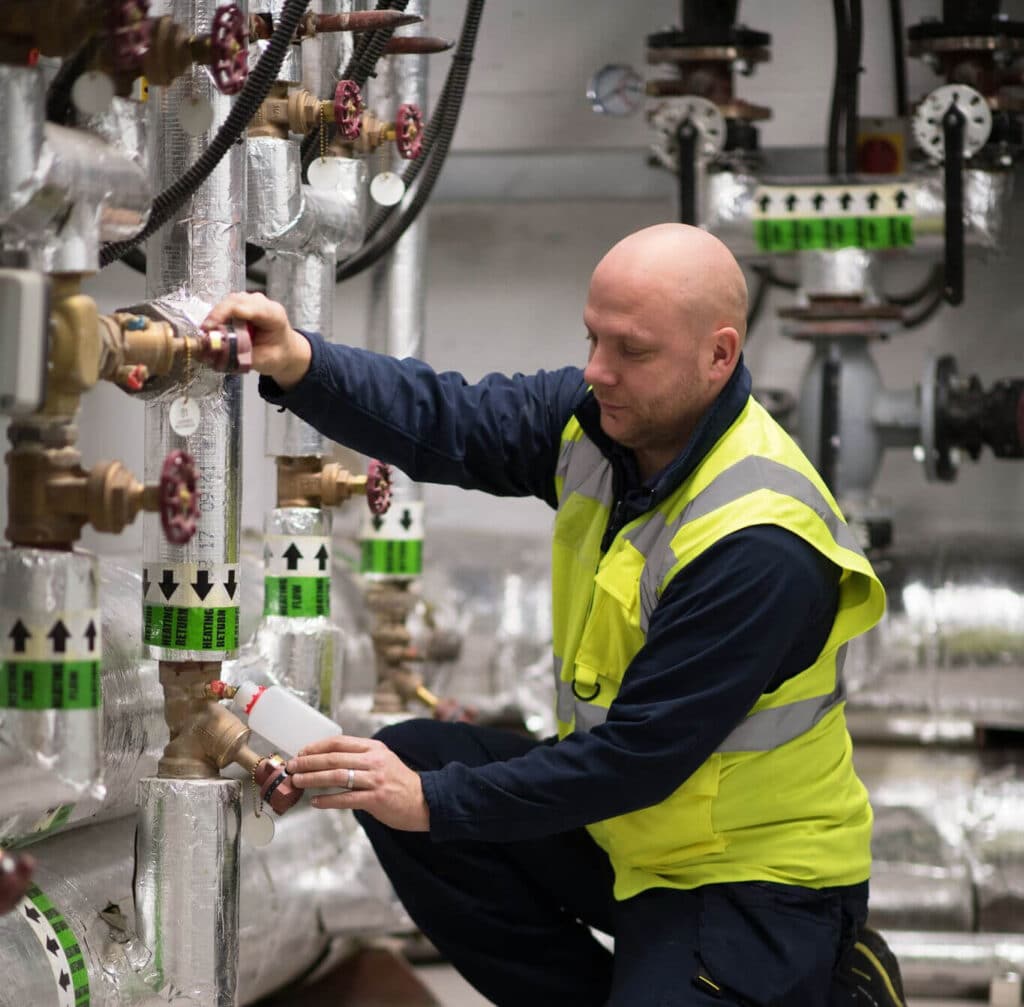
Water heaters, boilers, calorifiers and storage tanks can provide information about conditions near the beginning of the hot-water distribution system.
Recirculation Return
The return side of a recirculating hot-water system can help evaluate whether temperature and circulation are being maintained through the loop.
Proximal Outlets
Fixtures closer to the hot-water source can provide a comparison with more distant locations and help identify distribution patterns.
Distal Outlets
Fixtures at the ends of branches, risers or circulation loops can reveal conditions that may not be apparent close to the water source.
Low-Use Fixtures
Vacant rooms, seldom-used sinks and showers, closed wings and intermittent fixtures may experience greater water age and stagnation.
Higher-Risk Areas
In health care and senior facilities, sampling may emphasize areas serving occupants at greater risk of severe Legionnaires’ disease.
Cold water may also need to be evaluated.
Potable-water Legionella investigations should not automatically be limited to hot water. Cold-water samples may be appropriate when water warms in mechanical spaces, risers or low-flow branches, or when system history and prior results indicate a reason to evaluate the cold-water distribution system.
Build the plan before collecting bottles
A Practical Potable-Water Sampling Strategy
Review the Water-System Layout
Identify hot-water generation, storage, recirculation, pressure zones, major branches, low-use areas, distal fixtures and any treatment equipment.
Define the Testing Objective
Baseline monitoring, routine validation, a positive prior result, stagnation, corrective-action verification and an illness investigation require different levels of sampling.
Select Representative Locations
Include locations that allow meaningful comparison across the water system rather than choosing only the easiest faucets to access.
Define Collection Conditions
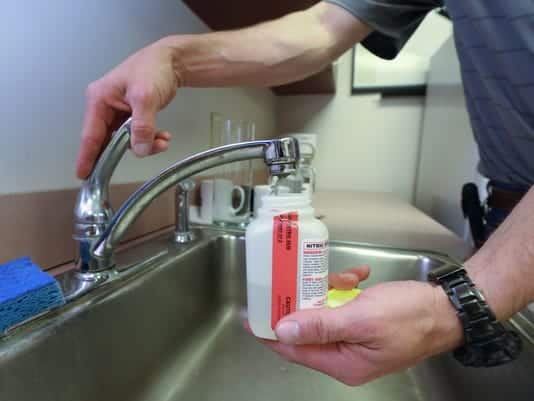
Decide whether the investigation requires initial outlet water, post-flush water, bulk water, biofilm swabs or a combination. The collection sequence should be consistent with the question being investigated.
Document Field Conditions
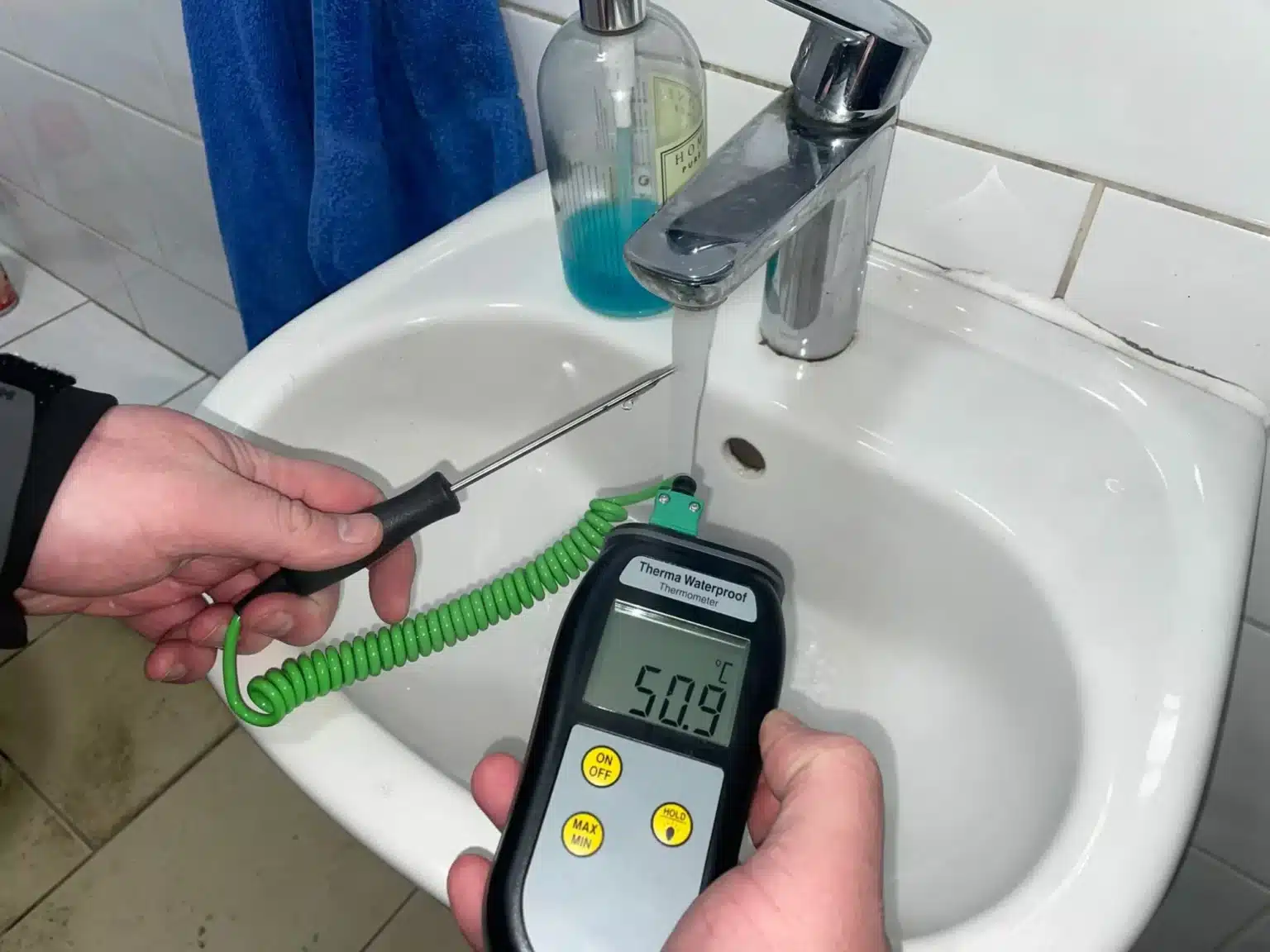
Record sample location, water type, flushing condition, temperature and other field observations included in the scope so the laboratory result can be interpreted in context.
Use a Qualified Laboratory
Sample containers, neutralizer, volume, transport, holding time and laboratory method should be coordinated before field collection.
Different collection methods answer different questions
Initial Water, Flushed Water, Biofilm Swabs and Culture
Initial Outlet Water
Water collected before extended flushing can emphasize conditions associated with the fixture and local branch. The exact collection procedure should be defined by the sampling objective.
Post-Flush Water
Water collected after a defined flushing period may better reflect upstream distribution water. Initial and flushed samples should not be treated as interchangeable.
Biofilm Swabs
Swabs from aerators, showerheads and other accessible surfaces can provide information about attached biofilm that may not be represented by bulk water alone.
Sample volume should match the laboratory method and project objective.
CDC notes that approximately 250 mL is often sufficient for routine testing, while larger volumes or additional sample types may provide useful information in some higher-risk or investigative settings. The laboratory should confirm the required container, volume and handling instructions before collection.
Water conditions affect growth and interpretation
Temperature, Water Age, Biofilm and Disinfectant Residual Matter
CDC identifies sediment and biofilm, temperature, water age and disinfectant residual as key factors affecting Legionella growth in potable water systems.
Temperature
Water that remains within a favorable temperature range can support Legionella growth. Both poor hot-water circulation and warming cold water can matter.
Water Age
Low flow, vacancy, dead legs and oversized piping can increase the time water remains in the plumbing system and reduce control.
Biofilm and Sediment
Biofilm, scale, corrosion products and sediment create surfaces and conditions that can support microbial growth inside plumbing and fixtures.
Disinfectant Residual
Disinfectant can decline as water moves through and remains within a building. Low residual may reduce one of the system’s barriers to microbial growth.
Avoid interpreting concentration in isolation
What Does a Legionella Culture Result Mean?
Culture results are commonly reported as colony-forming units per milliliter (CFU/mL). Interpretation should consider concentration together with the sample location, organism type, extent of positive sites, previous results and operation of the water-management program.
Non-Detect
A non-detect applies to the sample collected. It does not establish that every location in the building is free of Legionella or that conditions will remain unchanged.
CDC Routine-Testing Indicator
CDC describes potable-water culture results below 1 CFU/mL as consistent with well-controlled growth when interpreted within a routine water-management program.
Results Above the Program Baseline
A positive result or meaningful increase should prompt review of the sampled location, system controls, trend, organism type and the facility’s predefined response procedures.
The CDC value is not a universal legal clearance standard.
CDC’s routine-testing indicators are intended to support water-management program performance. Applicable health care requirements, state or local rules, facility policies, outbreak protocols or other governing programs may require different actions or interpretation.
Laboratory methods are not interchangeable
Culture vs. PCR for Legionella
Culture is designed to recover Legionella capable of growth under the laboratory method. Results are typically reported as CFU/mL, and cultured isolates may permit additional identification.
PCR or qPCR detects target genetic material and can provide faster screening, but genetic material may remain detectable even when organisms are no longer viable. PCR results therefore should not be directly substituted for culture action levels unless the governing program specifically supports that interpretation.
For many routine potable-water programs, culture remains the most directly interpretable method when decisions are based on viable Legionella concentrations.
Confirmation after corrective action
When Should Legionella Retesting Be Performed?
Retesting may be appropriate after flushing, plumbing corrections, temperature adjustments, disinfection or other measures intended to restore control. The timing should allow the water system to return to normal operating conditions and should follow any applicable facility or regulatory program.
CDC’s routine-testing guidance advises waiting at least 48 hours after the system has returned to normal operating conditions before representative confirmation sampling following remediation. A jurisdiction, health care protocol or facility plan may specify a different interval.
Confirmation sampling should generally revisit representative problem locations and relevant system control points rather than testing an unrelated faucet simply because it is convenient.
Related Angstrom services
Water and Bacteria Testing Services
Primary technical guidance
Official Legionella and Water-Management Resources
CDC guidance on sampling plans, sample volume, laboratory selection, performance indicators, interpretation and response.
Open CDC guidance CDC Controlling Legionella in Potable Water SystemsGuidance addressing temperature, water age, disinfectant residual, sediment, biofilm and building potable-water control measures.
Open CDC potable-water module CDC Sampling Procedure and Potential Sampling SitesCDC environmental sampling procedures for bulk water, biofilm swabs and commonly evaluated building water-system locations.
Open CDC sampling procedure ASHRAE ANSI/ASHRAE Standard 188-2021Minimum legionellosis risk-management requirements for covered building water systems and water-management programs.
Open ASHRAE informationPotable-water Legionella questions
Frequently Asked Questions
How many Legionella samples should be collected in a building?
There is no universal number that applies to every building. The number should reflect the size and complexity of the water system, the testing objective, hot-water generation and recirculation, representative proximal and distal outlets, low-use locations and any higher-risk areas.
Should Legionella samples be collected before or after flushing?
It depends on the question being investigated. Initial outlet water can emphasize the fixture and local branch, while post-flush water may better represent upstream distribution water. The collection condition should be defined before sampling and documented with the result.
Should cold water be tested for Legionella?
Sometimes. Cold-water sampling may be appropriate when cold water becomes warm, stagnation is present, disinfectant residual is low, prior results indicate a concern or the water-system design warrants evaluation.
Is a biofilm swab the same as a water sample?
No. A bulk water sample represents organisms in the collected water. A swab evaluates attached material from a selected surface such as an aerator or showerhead. The two sample types can provide different information.
What does a negative Legionella result mean?
It means Legionella was not detected in that sample under the analytical method. It does not prove that every part of the building is free of Legionella, and conditions can change with water use, temperature, maintenance and treatment.
What level of Legionella is acceptable in potable water?
CDC uses below 1 CFU/mL as a performance indicator consistent with well-controlled growth for routine potable-water testing within a water-management program. It is not a universal legal clearance level, and results should be interpreted with the sampling plan, trends and applicable facility requirements.
Can one positive faucet identify the source of a building problem?
Not necessarily. A positive outlet may reflect the fixture, local branch or a broader distribution-system condition. Comparison samples and review of the plumbing layout are often needed to understand the pattern.
Does Angstrom perform water-system disinfection or treatment?
No. Angstrom provides independent Legionella sampling, laboratory coordination, consulting and reporting. Plumbing repair, chemical treatment and disinfection are performed by appropriately qualified contractors.
Need Potable Water Legionella Testing?
Angstrom provides independent Legionella sampling for building hot- and cold-water systems, showers, sinks, storage tanks, recirculation systems and representative outlets throughout New York City, Long Island, Westchester and surrounding areas.